Comparison · Gloves
Boxing Gloves vs Muay Thai Gloves: Which Should You Buy?
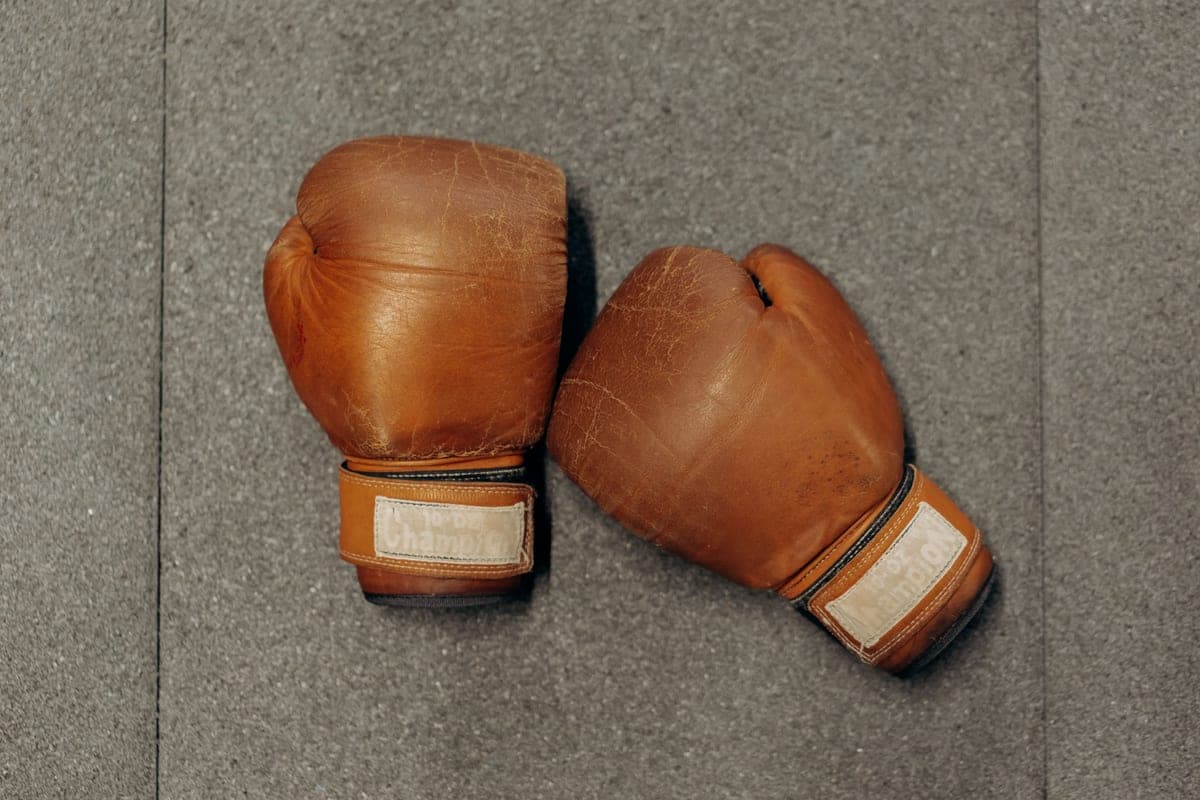
They look almost identical on a shelf and the marketing does nothing to help. The differences are real but small: where the foam sits, how far the palm opens, and how long the cuff runs. Here is what each one changes, and which pair a beginner training at home should actually buy.
Written by Mike M. · Owner, Iron Mako Media
Published
Bag & Bell is reader-supported. Product links go through our affiliate resolver and we may earn a commission from qualifying purchases at no cost to you. Prices are the retailer's and change — every button opens the live price on Amazon rather than showing a stale number.
Part of the Gloves hub.
The difference in one table
Every row below comes from what the manufacturers themselves publish. Fairtex, Hayabusa and YOKKAO all sell both styles and all describe the split the same way, which is unusual enough to be worth trusting.
| Boxing glove | Muay Thai glove | |
|---|---|---|
| Silhouette | Elongated, streamlined, boxy | Rounder, fuller through the hand |
| Where the foam is | Concentrated at the knuckles | Spread all round the hand |
| Palm | Closed, firmer grip bar, tight fist | Wider and more open; softer grip bar |
| Cuff / wrist | Longer and stiffer | Shorter and more flexible |
| Designed to survive | Repeated punching | Punches, plus blocking and catching kicks |
| Typical training weights | 12–16 oz | 12–16 oz (some brands to 18–20 oz) |
| On a heavy bag alone | Excellent | Fine |
| In a boxing gym's sparring | Expected | Often allowed; ask first |
| In a Muay Thai clinch | Awkward | The point of the design |
Where the foam goes, and why it is not just marketing
A boxing glove only has one job on the hand: survive thousands of punches thrown at a bag, a pad or a person. Hayabusa puts it plainly — boxing gloves have “heavy knuckle padding for greater protection for repetitive punches during bag work and sparring.” The foam is stacked where the impact lands and thinned everywhere else, which is what gives a boxing glove its long, narrow profile.
A Muay Thai glove has to do that plus absorb things the hand never absorbs in boxing. Hayabusa again: Muay Thai gloves “require even more padding since blocking, parrying, and catching kicks are also involved.” YOKKAO describes the result as “a rounder silhouette with all-round foam padding” where “the extra padding provides protection against punches, elbows and kicks.” You are not necessarily getting more foam in a Thai glove at the same ounce; you are getting the same foam distributed differently — some of what would have gone on the knuckles is wrapped around the back and sides of the hand instead.
For a beginner hitting a heavy bag this is close to a wash, because a bag does not throw anything back. It starts to matter the first time someone kicks at you and you block it with the outside of your forearm and glove.
The palm: the difference you will feel first
Pick up a Thai glove after a boxing glove and the palm is the thing your hand notices. Fairtex describes its Muay Thai models as having a “slightly wider palm” and a “slightly squared-off fingertip area” that is “more open,” against a boxing glove that is “more elongated with denser knuckle padding.” The grip bar — the foam ridge your fingers curl over — is usually softer too.
That is all in service of one movement: opening the hand. In Muay Thai you open your hand to catch a kick, to frame and grab in the clinch, and to parry. A boxing glove fights you on all three, because it was built to hold a fist closed and keep it closed. Boxers never need to let go of anything.
The trade runs the other way too. A firm grip bar in a boxing glove helps a beginner make a correct fist, which matters more than it sounds like it should — a loose fist at the moment of impact is one of the common ways people hurt a hand on a heavy bag. If you have never punched anything before, a boxing glove is quietly coaching you.
Cuff length and wrist support: the real trade
This is the difference with actual safety consequences, and it is the reason we steer most beginners toward a boxing-style glove. Hayabusa states that boxing gloves have “a more rigid wrist structure for punch support to keep the wrists and hands in alignment,” while Muay Thai gloves “typically have more flexible wrists to support clinching movements.” YOKKAO says Thai gloves “tend to be less stiff or rigid so as to allow for clinching.”
A flexible wrist is not a defect in a Thai glove — it is the feature, and it is why a Thai fighter can grab a neck without a cuff jamming into their forearm. But the wrist is where beginners get hurt. A common complaint after a first month on a bag is not knuckle pain, it is a sore wrist from a punch that landed slightly off-line, and that is exactly what a long, splinted cuff is there to prevent. The wrist and knuckle pain guide covers what to do when it has already happened.
Two things narrow this gap. First, wrapping: a 180-inch wrap put on properly supports the wrist more than any glove cuff does, in either style. Second, brand variation — some Thai gloves run a long cuff and some boxing gloves run a short one. Read the individual model, not the category.
Fit and sizing: same ounces, different hand compartment
Ounces mean the same thing in both sports — padding weight, not hand size — so the size chart on this site applies to a Thai glove without adjustment. Everlast publishes the clearest version of it for the Elite: 8–12 oz up to 100 lb, 12–14 oz from 101 to 150 lb, 14–16 oz from 151 to 175 lb, and 16–18 oz over 175 lb. Fairtex's own buying guidance splits it by use instead — it suggests 8–10 oz for competition, 10–12 oz for pad and bag work, and 14–16 oz for sparring. Where the two disagree, go heavier: more foam is more protection for the person in front of you, and a longer life for the glove.
The compartment is where the styles really diverge. Thai gloves are frequently built to a tighter, contoured last — Fairtex calls the BGV1's a “contoured, tight-fit hand compartment” — and that snugness is deliberate, because a hand that slides forward inside a glove is a hand that lands on the wrong part of the padding. It also means a Thai glove with wraps on can be genuinely tight. If you are between sizes on a Fairtex, or you wrap with a full 180-inch wrap, go up an ounce.
Hayabusa notes one more wrinkle worth knowing: boxing gloves are typically sold between 10 and 18 oz, while Muay Thai gloves sometimes reach 20 oz. You will almost never need the top of that range as a beginner. 12, 14 or 16 oz covers essentially everyone starting out.
Can you use one for the other?
Mostly, yes — with one asterisk each, and both asterisks come from the manufacturers rather than from us.
Boxing gloves for Muay Thai. YOKKAO says boxing gloves “can be used for general Muay Thai training but not as recommended for Muay Thai sparring or competitions.” That matches the design logic: a bag and a set of pads do not require an open hand, so a boxing glove is fine for the parts of Muay Thai training a beginner actually does. It stops being fine once you are catching kicks from a partner.
Muay Thai gloves for boxing. YOKKAO again: Thai gloves “are increasingly popular for boxing training due to their complete protection and versatility.” The catch is the cuff. If you are a beginner with no wrist conditioning, punching a heavy bag in a short-cuffed glove asks more of your wrist than punching in a long one. Wrap well, and do not skip the wrap because the glove feels padded.
Hayabusa's own conclusion is the conservative one — “it's best to get gloves designed for the specific discipline you're focused on.” That is correct advice for someone who already knows what they are focused on. Most people reading this do not yet, which is why the honest recommendation for a first pair is the boxing-style training glove: it is the more forgiving of the two to learn in, and it is the one a boxing gym will never question.
What a gym will actually ask for
If you are training at home, this section does not apply to you. If you plan to walk into a class, it does, and the rule of thumb is simple: boxing gyms are stricter than Muay Thai gyms. A boxing coach running sparring will usually specify 16 oz boxing gloves and may not accept a Thai glove for it. A Muay Thai gym will generally let you spar in a 16 oz boxing glove, while telling you that you will want a Thai pair once you start clinching. Either way, ask before you buy for a specific gym — a coach who has a rule will tell you the rule.
Competition is a separate question entirely. Sanctioning bodies set glove weight, brand and sometimes color for sanctioned bouts, and your coach will tell you what to buy when that day comes. Nothing on this page is competition guidance.
So which one, for a garage?
For the reader this site is built for — one person, one bag, a set of wraps, no partner yet — buy a 14 or 16 oz boxing-style training glove sized by your body weight, and do not think about it again for a year. It handles bag work, pad work and a first sparring session, and the stiffer cuff is on your side while your wrists are learning. The beginner roundup ranks those pairs, and bag gloves vs sparring gloves covers the other split that trips up first-time buyers.
Buy the Thai glove when there is a specific reason to: you have signed up for Muay Thai or kickboxing, you clinch, or you simply prefer the rounder feel and want leather at a fair price. The kickboxing glove roundup ranks those, and kickboxing equipment for home covers the rest of the kit that comes with adding kicks — shin guards, mostly.
How this comparison was made
We read the manufacturers' own education and spec pages for both styles — Fairtex, Hayabusa and YOKKAO all sell Muay Thai and boxing gloves, so each has a commercial reason to describe the difference accurately — and recorded only the points where at least two of them agree. Availability of all three picks was confirmed on the manufacturers' own stores in September 2026. We have not tested these gloves and do not claim to; the scores on the cards below are editorial judgments from published specs, and the methodology page says so in those words.
Picks
Three pairs: one of each, and one that splits the difference
The Everlast Elite is the boxing-style default with the stiffest wrist of the three; the Fairtex BGV1 is the Thai reference glove; the Venum Elite is Thai-made but boxing-shaped, which is why it is the sensible pick if you genuinely do both.

Key specs
- Weights
- 8 · 12 · 14 · 16 oz
- Closure
- Full-length hook-and-loop, splint-style wrist
- Padding
- Triple-layer C3 foam
Scores · editorial, out of 10
- Wrist support
- 8
- Knuckle padding
- 8
- Fit & closure for beginners
- 9
- Materials & durability
- 6
- Value for a first pair
- 9
Pick 01 · Boxing gloves
Everlast Elite Boxing Gloves
Everlast
The safe default first pair: a full-length hook-and-loop strap with a splint-style wrist, triple-layer foam, and a published weight chart to size it by.
Best for
A first pair for bag work, sized by body weight
Pros
- Everlast publishes a weight-to-ounce chart for this glove (12–14 oz at 101–150 lb, 14–16 oz at 151–175 lb, 16–18 oz over 175 lb)
- EverShield wedge-shaped strap runs the full length of the wrist — easy to close one-handed
- Mesh palm and soft lining make it comfortable for the 30-minute sessions a beginner actually does
- Attached thumb and a foam grip bar encourage a correct fist
Cons
- PVC outer shell rather than leather — expect it to show wear sooner than a leather pair
- No 10 oz option; the jump from 8 oz to 12 oz skips the size some smaller adults want
Specs from Everlast — Elite Boxing Gloves (specs and size chart).
Key specs
- Weights
- 8 · 10 · 12 · 14 · 16 oz
- Closure
- Hook-and-loop, short wrist
- Padding
- Three-layer foam, genuine leather
Scores · editorial, out of 10
- Wrist support
- 6
- Knuckle padding
- 8
- Fit & closure for beginners
- 8
- Materials & durability
- 9
- Value for a first pair
- 7
Pick 02 · Kickboxing gear
Fairtex BGV1 Universal Gloves
Fairtex
The Muay Thai reference glove: genuine leather, three-layer foam, a tight-fit hand compartment and a short cuff that lets you check kicks.
Best for
Kickboxing and Muay Thai beginners who want one glove for bag, pads and clinch drills
Pros
- Genuine leather at a price that is fair for leather
- Short cuff and open-hand feel suit kickboxing (catching kicks, clinching) better than a long boxing cuff
- Handmade in Thailand; five weights
Cons
- That same short cuff means less wrist support than a boxing-style glove
- Tight-fit compartment runs snug — hand wraps make it snugger
Specs from Fairtex — Universal Gloves BGV1 (specs).
Key specs
- Weights
- 8 · 10 · 12 · 14 · 16 oz
- Closure
- Wide hook-and-loop
- Padding
- Triple-density foam
Scores · editorial, out of 10
- Wrist support
- 7
- Knuckle padding
- 8
- Fit & closure for beginners
- 8
- Materials & durability
- 7
- Value for a first pair
- 7
Pick 03 · Boxing gloves
Venum Elite Boxing Gloves
Venum
Thai-made Skintex glove with triple-density foam and a wide strap, rated by Venum for bag work and light-to-moderate sparring.
Best for
A first pair that grows into light sparring
Pros
- Five weights including 10 oz — good for smaller adults
- Venum states the use case: bag work and light-to-moderate sparring
- Attached thumb and reinforced palm; handcrafted in Thailand
Cons
- Venum publishes no body-weight size chart for it — use ours
- Skintex is a synthetic; it is not the leather the price might suggest
Specs from Venum — Elite Boxing Gloves (specs).
FAQ
Frequently asked questions
Can I use boxing gloves for Muay Thai?
For bag work, pad rounds and conditioning, yes. YOKKAO says boxing gloves “can be used for general Muay Thai training but not as recommended for Muay Thai sparring or competitions” — the closed palm and long cuff get in the way once you start catching kicks and clinching.
Can I use Muay Thai gloves for boxing?
Yes. Thai gloves are common in boxing gyms, and YOKKAO notes they are “increasingly popular for boxing training.” The one thing you give up is cuff stiffness, so wrap your wrists properly. Some boxing coaches still want a 16 oz boxing glove for sparring specifically — ask before the session, not during it.
Are Muay Thai gloves more padded than boxing gloves?
Not necessarily more, but spread differently. A Muay Thai glove distributes foam all round the hand to survive blocking and catching kicks; a boxing glove concentrates it at the knuckles for punching. At the same ounce the padding weight is the same — it is sitting in different places.
What size Muay Thai gloves should a beginner get?
The same ounce you would buy in boxing, by body weight — usually 14 oz for bag and pad work, and 16 oz if you will spar. Size up if you are between sizes, because Thai compartments run snug and hand wraps make them snugger. The size chart applies to both styles.
Do Muay Thai gloves have an open palm?
No — the fingers are fully enclosed, exactly as in boxing. The palm is simply wider and more flexible so the hand can open to catch and clinch. Open-fingered gloves are MMA gloves, which are a different product and are not appropriate for heavy bag work.
Is one style better for a heavy bag at home?
A boxing glove, slightly, on the wrist-support argument alone — but the gap is small and either works. What matters much more is buying the right ounce and wearing wraps. See gloves for the heavy bag.
Next in your kit
Boxing glove size chart →Keep reading
Related guides
- Best kickboxing gloves →
The Thai-style pairs, ranked.
- Best boxing gloves for beginners →
The boxing-style first pairs.
- Boxing glove size chart →
Ounces by body weight — it applies to both styles.
- Boxing vs kickboxing at home →
The sport decision, before the glove decision.
- Kickboxing equipment for home →
Shin guards and the bag that takes kicks.
- Hand wraps for kickboxing and MMA →
The small wrapping differences between the sports.
Sources
- —Fairtex — Muay Thai Gloves vs Boxing Gloves: Key Differences · fairtex.com
- —Hayabusa — Muay Thai Gloves vs. Boxing Gloves: Key Differences Explained · hayabusafight.com
- —YOKKAO — Muay Thai Gloves VS Boxing Gloves: What is the Difference? · yokkao.com
- —Everlast — Elite Boxing Gloves (specs and size chart) · everlast.com
- —Fairtex — Universal Gloves BGV1 (specs) · fairtex.com
- —Venum — Elite Boxing Gloves (specs) · venum.com