Guide · Hand Wraps
How to Wash Hand Wraps
Wraps are the one piece of boxing kit you can actually put in a washing machine — and the one people ruin anyway, by tumble drying them. Close the hook-and-loop, put them in a mesh bag, run a cool cycle, hang them up. That is the whole method, and here is why each step matters.
Written by Mike M. · Owner, Iron Mako Media
Published
Bag & Bell is reader-supported. Product links go through our affiliate resolver and we may earn a commission from qualifying purchases at no cost to you. Prices are the retailer's, come from Amazon's own product data on the date shown, and change — the button always opens the live listing.
Part of the Hand Wraps hub.
How to wash hand wraps · 6 steps
Step 01
Unroll them straight after training
Do not roll a damp wrap back up and do not put it in a closed bag. Unroll it and hang it until wash day. This single habit prevents most of the smell people are trying to wash out.
Step 02
Close the hook-and-loop
Fold the hook-and-loop closure back onto the wrap so the hooks are covered. An open closure grabs everything in the drum, including the other wrap, and shreds the fabric it catches.
Step 03
Put them in a mesh laundry bag
Two wraps loose in a machine come out as one knot. A zipped mesh bag keeps each wrap contained and still lets water and detergent through. Wash the pair in one bag, or one wrap per bag if yours tangle badly.
Step 04
Cool cycle, normal detergent, no bleach
Cold or 30C, a gentle or delicate cycle, a normal dose of detergent. No bleach, no fabric softener - softener coats the fibres and reduces both grip and absorption. Wash them with towels or gym clothes, not with anything delicate.
Step 05
Air dry, away from heat
Hang them over a rail or a line, unrolled, somewhere with moving air. Never a tumble dryer, a radiator or direct strong sun: heat is what destroys the elastic, and the elastic is the property you bought. Expect a full day for a 180 in wrap.
Step 06
Roll them only when bone dry
Roll from the closure end with the thumb loop out, so the wrap is ready to use next session. A wrap rolled while slightly damp will smell by the time you unroll it.
Why wraps need washing more than the rest of your kit
A hand wrap has one job you can see — binding the hand and wrist — and one you cannot: soaking up the sweat that would otherwise sit in the lining of your gloves. It is doing that job every session, against your skin, and unlike the gloves it is washable. So a wrap that goes unwashed is both a smell problem and a wasted advantage. Our gloves vs hand wraps page covers that second role; how to clean boxing gloves explains what happens to the gloves when you skip it.
The table version
| Step | Do | Do not |
|---|---|---|
| Before the wash | Unroll and hang after every session | Roll up damp, or leave in a gym bag |
| Closure | Fold the hook-and-loop shut | Leave it open in the drum |
| Container | Zipped mesh laundry bag | Loose in the machine |
| Temperature | Cold or 30C, gentle cycle | Hot wash |
| Detergent | Normal dose | Bleach or fabric softener |
| Drying | Hang unrolled, moving air | Tumble dryer, radiator, strong direct sun |
| Frequency | Every 2-3 sessions, or every session in summer | Monthly |
Why the dryer is the real enemy
Almost every wrap worth owning is semi-elastic: a cotton or polyester base with elastic woven through it, which is what lets the wrap conform to the hand and hold tension across the wrist. Heat degrades that elastic. A wrap that has been through a hot dryer a few times goes slack, and a slack wrap does not hold a knuckle pad or lock a wrist — it just adds bulk. You cannot see the damage; you feel it as a wrap that will not stay tight. The same applies to a radiator, which is a dryer with extra steps.
How to stop wraps tangling
Two 180 in strips of fabric in a washing machine want to become one rope. Three things fix it, in order:
- Close the hook-and-loop. Most tangles start when the hooks grab the other wrap.
- Use a mesh bag. One zipped bag for the pair is usually enough; one bag each if yours are stubborn.
- Roll them loosely before they go in. Not tight — just enough that they go in as a coil rather than a snake.
If they do come out knotted, do not pull. Find the closure end, lay the wrap out flat on the floor and work from that end — yanking a wet semi-elastic wrap is how you stretch it permanently.
Washing wraps by hand, and in a hotel sink
Fill a sink with cool water and a small amount of detergent, submerge the unrolled wrap, and squeeze it through your hands rather than scrubbing it. Rinse until the water runs clear. Then — and this is the part people get wrong — press the water out between two towels rather than wringing the wrap. Wringing twists the elastic. Hang it over the shower rail and it will be dry in a day, or faster for a 120 in wrap.
Two pairs is the actual solution
Everything above is easier if you are not trying to keep one pair alive. A wrap needs about a day to dry, so training three or four times a week on a single pair means putting on a damp wrap most sessions. A second or third pair costs very little — the Meister 180 in below is there for exactly this — and the benefit is immediate: a dry, clean wrap every session, and gloves that last longer because the wrap is doing its absorption job properly. If you want to know which fabrics survive this routine best, that is best breathable hand wraps.
What about quick wraps and gel wraps?
Different rules. A slip-on gel wrap has foam and gel inserts that behave like glove padding, not like fabric: turn them inside out, air dry them after every session, and wash them cold in a mesh bag far less often than you would a cloth wrap. Never tumble dry them, and never soak them — the inserts hold water in the middle. Our quick wrap roundup covers the models and their care.
Picks
The wraps worth washing, and the spare pair that makes it easy
Our overall pick, because a cotton-blend wrap survives this routine for years. Then the cheap full-length pair we tell everyone to buy as a second or third set, which is what lets you wash one while wearing another.
Key specs
- Length
- 180 in (4.5 m)
- Fabric
- Stretch cotton-polyester blend
- Closure
- Hook-and-loop, wide-mouth thumb loop
Scores · editorial, out of 10
- Support & elasticity
- 9
- Length options
- 7
- Thumb loop & closure
- 9
- Wash durability
- 8
- Value
- 9
Pick 01 · Hand wraps
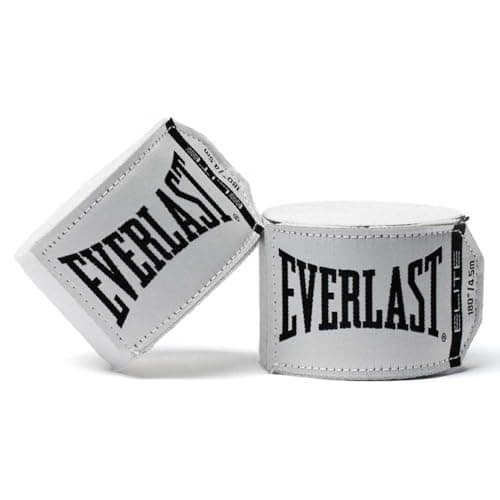
Everlast Elite Hand Wraps (180 in)
Everlast
The default adult wrap: 180 inches of stretchy cotton-poly, a wide-mouth thumb loop, hook-and-loop, machine washable.
Best for
Every adult's first wraps
Pros
- 180 in covers Mexican-style wrapping with knuckle padding for adult hands
- Wide-mouth thumb loop is easier to start than a narrow one
- Machine washable — you will wash these every week
Cons
- Only 180 in; buy the Core 120 in for small hands or kids
- Stretch wraps loosen slightly as they age
Specs from Everlast — Elite Hand Wraps 180 in (specs).
Key specs
- Length
- 180 in (adult)
- Stretch
- Semi-elastic
- Sold as
- One pair
Scores · editorial, out of 10
- Support & elasticity
- 7
- Length options
- 6
- Thumb loop & closure
- 7
- Wash durability
- 8
- Value
- 10
Pick 02 · Hand wraps
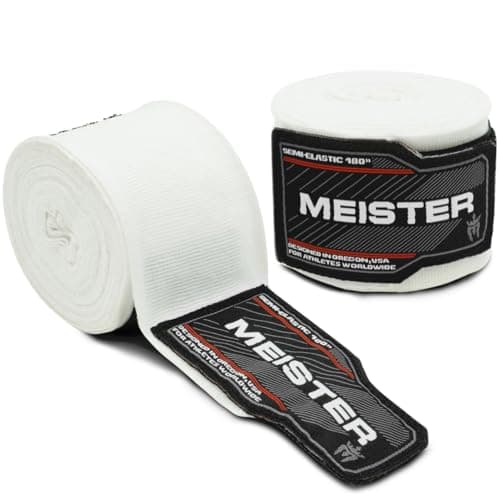
Meister Adult 180 in Semi-Elastic Hand Wraps
Meister
The cheapest full-length wrap we would put on a beginner: a 180 in adult semi-elastic pair, sold by the pair in a dozen colors.
Best for
A second or third pair so you always have a dry set
Pros
- 180 in is the length that actually covers knuckles, wrist and thumb on an adult hand
- Semi-elastic, so it conforms without the dead feel of a rigid cotton wrap
- Costs less than any other wrap here — cheap enough to own three pairs and always have a dry set
Cons
- Meister publishes no fabric blend or width for this wrap
- Semi-elastic stretches out faster than a Mexican-style cotton-nylon blend over a year of washes
Specs from Amazon listing — Meister Adult 180 in Semi-Elastic Hand Wraps (length, stretch, pack; checked 2026-10-03).
FAQ
Frequently asked questions
Can you put hand wraps in the washing machine?
Yes — wraps are the one piece of boxing kit that machine washes well. Close the hook-and-loop, put them in a zipped mesh bag, and run a cool gentle cycle with normal detergent.
Can you tumble dry hand wraps?
No. Heat degrades the elastic woven through the wrap, and a wrap that has lost its stretch will not hold tension across the wrist. Hang them unrolled and give them a day.
How do you wash hand wraps without them tangling?
Fold the hook-and-loop closure shut so the hooks cannot grab, roll each wrap loosely, and put them in a zipped mesh laundry bag. If they still knot, wash one wrap per bag.
How often should you wash hand wraps?
Every two or three sessions, or every session in hot weather. Unroll and hang them after every single session regardless — that habit matters more than the wash frequency.
Can you use fabric softener on hand wraps?
No. Softener coats the fibres, which reduces how much sweat the wrap absorbs and how well it grips itself when you cinch it. Plain detergent only.
How do you wash hand wraps in a sink?
Cool water, a little detergent, squeeze the unrolled wrap through your hands rather than scrubbing, rinse until clear, then press the water out between two towels — do not wring it. Hang to dry.
Next in your kit
Best boxing gloves for beginners →Keep reading
Related guides
- Best breathable hand wraps →
Which fabrics survive this routine.
- Best hand wraps for boxing →
What to buy as a second pair.
- How to clean boxing gloves →
The kit you cannot machine wash.
- How to wrap your hands →
Rolling them so they are ready.
- Best quick wraps and gel wraps →
Different kit, different care.
Sources