Beginner picks · Protection
Best Boxing Headgear for Eye Protection
Start with the honest part: no boxing headgear protects the eyeball. Nothing legal in boxing covers the eye. What headgear does do is shield the bone around it — brow, cheekbone, orbital rim — and a face bar puts a physical barrier across the eye line. Five models ranked on exactly that, with the limits stated plainly.
Written by Mike M. · Owner, Iron Mako Media
Published
Bag & Bell is reader-supported. Product links go through our affiliate resolver and we may earn a commission from qualifying purchases at no cost to you. Prices are the retailer's and change — every button opens the live price on Amazon rather than showing a stale number.
Part of the Protection hub.
Quick picks
| # | Product | Best for | Score | Price |
|---|---|---|---|---|
| 01 | 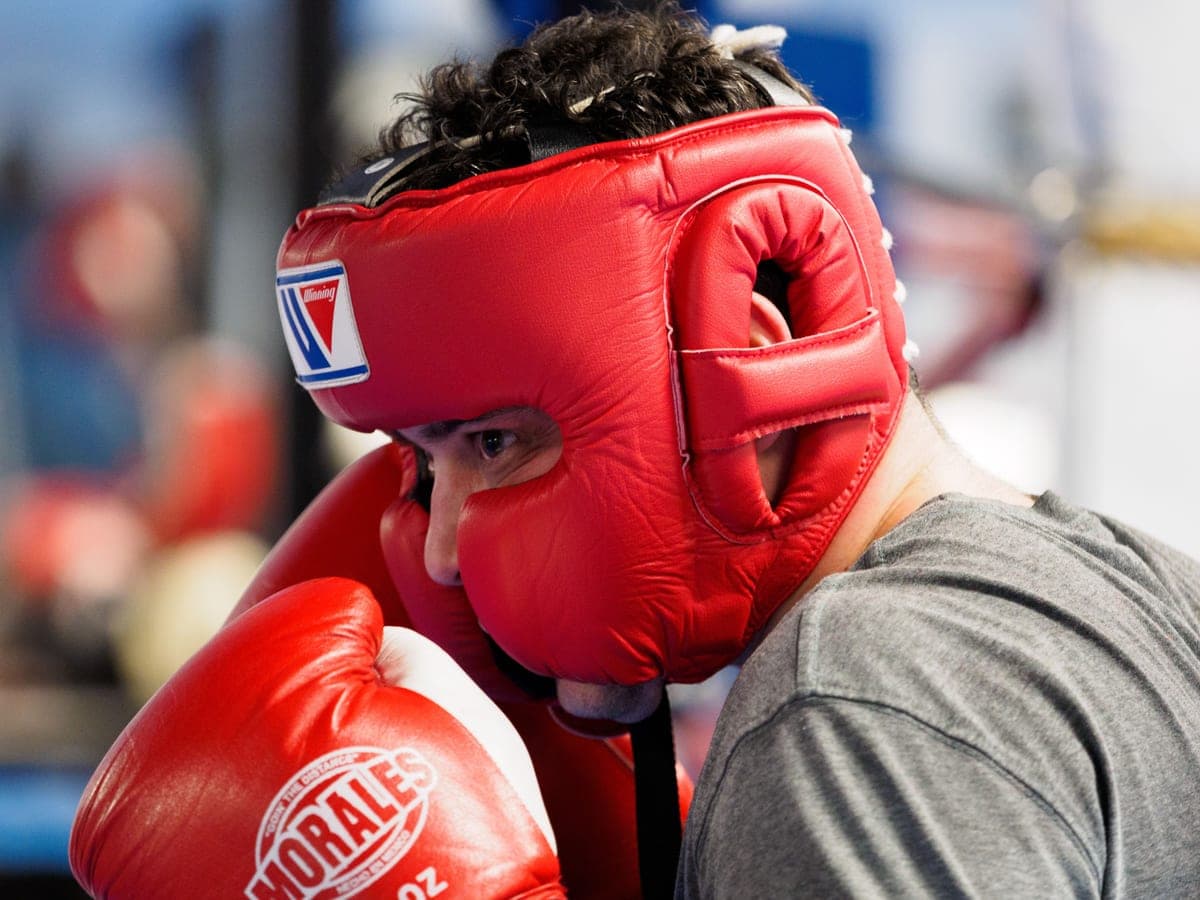 Ringside Deluxe Face Saver Headgear The most shielded option here: an all-leather shell built to keep punches off the face entirely, with a lace top, adjustable rear closure and a buckle chin strap. | The beginner who wants the most face coverage available and accepts a narrower view | 7.5 | |
| 02 | TITLE Gel World Full-Face Training Headgear The most coverage without a bar: gel-lined foam over padded cheeks, forehead, ears and back, with added chin protection and a rear-entry hook-and-loop closure. | Maximum padded coverage for a cautious first sparrer who doesn't want a face bar | 7.8 | |
| 03 | Hayabusa T3 Boxing Headgear The beginner-friendly sparring default: full cheek coverage, an open top that breathes, and a T-Cross closure that stays put — the reason it is the first headgear most gyms hand a new sparrer. | A first pair of sparring headgear for an adult who wants cheek coverage without a face bar | 8.3 | |
| 04 | 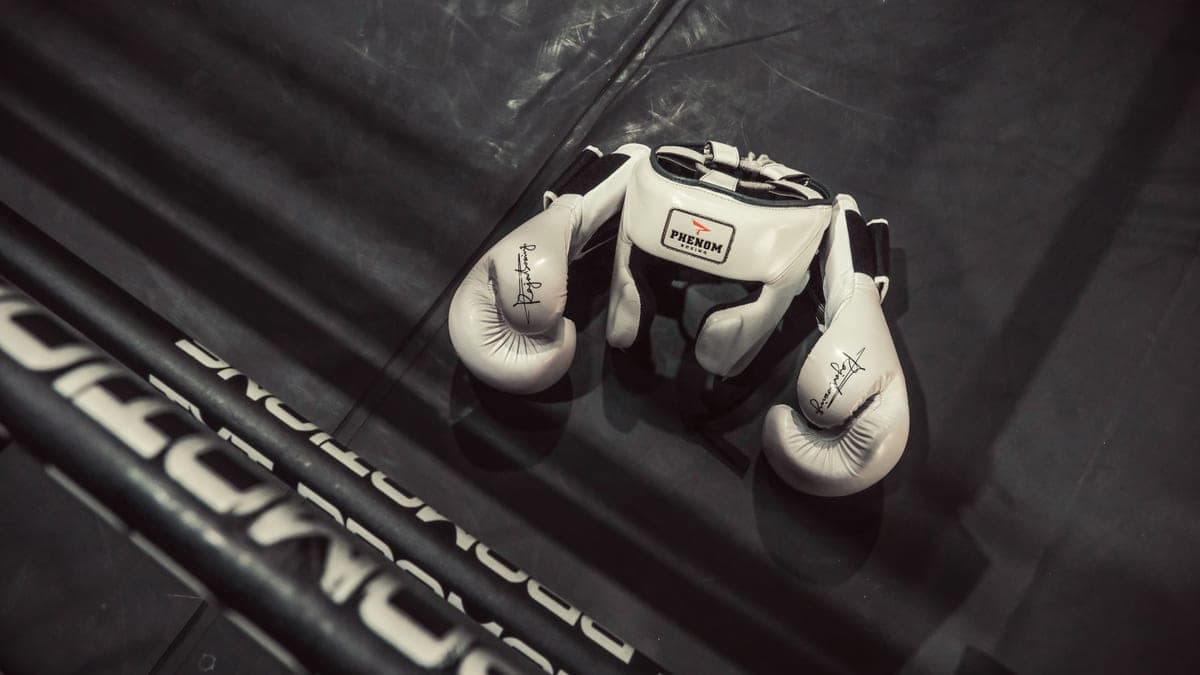 Everlast Elite 2 Headgear The face-bar pick with a published size chart: a lightweight plastic-insert bar across the nose, dual-layer foam under a hard outer shell, and a top lace plus two rear straps to dial the fit. | A first sparring headgear with nose coverage, sized by a real chart | 8.2 | |
| 05 | Venum Elite Headgear The lightest-feeling of the mainstream open-face models: triple-density foam, an open 180-degree view, and a two-way hook-and-loop closure in one adjustable size. | Light, breathable sparring headgear where vision matters more than nose coverage | 8.2 |
Scores are our editorial judgment from published specs and manuals, weighted for a first home setup — not lab measurements. We have not tested these units.
What headgear can actually do around the eye
Three things, all real and all indirect:
- Cover the brow. The ridge above the eye is where sparring cuts happen, and a cut brow bleeds into the eye and ends the session. Padding across the forehead and down to the brow line is the single most useful thing headgear does for your eyes.
- Cover the cheekbone and orbital rim. Cheek protectors pad the bone that forms the bottom and outside of the eye socket. That reduces the swelling that closes an eye shut over the following day, which is the most common way sparring costs you vision.
- Put a bar across the eye line. A face bar is the only design here that physically obstructs the path a straight punch or a thumb would take toward the socket. It is the closest thing to eye protection boxing has, and it is still not eye protection.
What none of them do is stop a thumb going in around the aperture. That is a technique and glove problem — an attached thumb on both pairs of gloves, and a partner who controls their punches. See sparring gloves; every glove there has an attached thumb, and that matters more for your eyes than any headgear on this page.
The aperture trade-off, which is the whole design problem
Headgear coverage and vision are in direct conflict. Pad more of the face and you narrow the opening you see through; open the aperture up and you expose more bone. That trade is the entire reason this category has four distinct styles, and why the “most protective” headgear is not automatically the right one:
| Style | Brow | Cheek / orbital rim | Eye line | Vision cost |
|---|---|---|---|---|
| Face bar (face saver) | Full | Full | Bar across it | Noticeable — downward view, and a bar in your eyeline |
| Full face + chin | Full | Full | Open | Some — narrower lower field |
| Cheek protectors | Full | Full | Open | Little |
| Open face (competition) | Partial | Minimal | Open | None — the most vision, the least coverage |
A bar you cannot see past makes you drop your chin and lean, which gets you hit more. That is a real cost, and it is why we do not simply rank the most-covered model first for everyone. The nose bar roundup goes deeper on the bar models specifically — this page is about the eye area, and the bar is one of four answers to it.
Fit does more for your eyes than coverage does
Headgear that rotates is the actual eye risk, and it is the thing people ignore. If a hook lands on the side of a loose headgear, the whole thing turns — and now the padding is over your ear and the aperture is over your cheekbone, with the edge of the opening sitting where a punch will drive it into your orbital rim. A well-fitted open-face headgear protects your eyes better than a poorly fitted face-bar model.
So: a two-point closure — a rear closure and a chin strap — matters more than an extra pad. Measure about an inch above the ears and eyebrows, use the brand's chart, and check that you cannot turn it a quarter-turn by hand with the straps closed. Our sizing guide covers it properly, and that ordering is why fit carries as much rubric weight as coverage below.
How this list is ordered
By our published headgear rubric — coverage and fit/adjustability at 25% each, vision at 20%, weight and breathability 15%, value 15% — read specifically for the eye area. Models that cover the brow and orbital rim and hold their position rank above models that cover more but sit loose, and vision is scored as a genuine cost rather than an afterthought. We have not worn any of these; every spec comes from the manufacturer page cited under each card, checked on 28 September 2026, including which sizes were in stock that day.
Contact lenses and glasses
You cannot spar in glasses — the frame is exactly the hazard you are trying to avoid. Soft contact lenses are what most people use, and the practical risks are a lens displacing when you get hit and grit getting under it. Whether that is sensible for your eyes is a question for your optometrist, not for us. There is no prescription boxing headgear and no legal eye shield in the sport, so if you cannot train in lenses, the honest answer is that sparring may not be for you — bag and pad work needs no headgear at all. See when you actually need headgear.
The picks in detail
Every pick, reviewed
Key specs
- Sizes
- S/M · L/XL (by hat size)
- Coverage
- Full face shield
- Closure
- Lace top + rear + buckle chin
Scores · editorial, out of 10
- Coverage
- 10
- Vision
- 5
- Fit & adjustability
- 8
- Weight & breathability
- 6
- Value
- 7
Pick 01 · Headgear · REF PRO-01
Ringside Deluxe Face Saver Headgear
Ringside
The most shielded option here: an all-leather shell built to keep punches off the face entirely, with a lace top, adjustable rear closure and a buckle chin strap.
Best for
The beginner who wants the most face coverage available and accepts a narrower view
Why it is #1 for the eye area. The only model here with a bar across the eye line — the single design that physically obstructs a straight punch or a thumb heading for the socket — plus full brow and cheek coverage in leather, with an adjustable rear closure and a lace top so it can be form-fitted rather than approximately fitted. It listed at $159.99 and was in stock when we checked. The cost is genuine and you should expect it: reduced downward vision and a few sessions getting used to a bar in your eyeline.
Pros
- Ringside describes it as shielding the head so punches don't make direct contact with the face
- Made entirely of leather with a moisture-wicking liner
- Three-point adjustment: lace top, adjustable rear closure and buckle chin strap
- Sized by fitted hat size (measure about 1 in above the ears)
Cons
- The narrowest field of vision on this page — that is the trade for the coverage
- Heavier and warmer than an open-face model; laces take longer to set than hook-and-loop
Specs from Ringside — Deluxe Face Saver Boxing Headgear.
Key specs
- Sizes
- Regular · Large
- Coverage
- Cheeks, forehead, ears, back + chin
- Padding
- Gel lining over layered foam
Scores · editorial, out of 10
- Coverage
- 10
- Vision
- 6
- Fit & adjustability
- 8
- Weight & breathability
- 6
- Value
- 8
Pick 02 · Headgear · REF PRO-02
TITLE Gel World Full-Face Training Headgear
TITLE Boxing
The most coverage without a bar: gel-lined foam over padded cheeks, forehead, ears and back, with added chin protection and a rear-entry hook-and-loop closure.
Best for
Maximum padded coverage for a cautious first sparrer who doesn't want a face bar
Maximum coverage without a bar. Gel-lined foam across padded cheeks, forehead, ears and back plus added chin protection, with a rear-entry closure. For anyone who wants the brow and orbital rim well covered but cannot get on with a bar in their field of view, this is the pick. Trades heat and a narrower lower field. Black was in stock in both sizes on 28 September 2026; Red was sold out in both.
Pros
- Gel lining plus multi-layered foam — TITLE's most padded training shape
- Fully padded cheeks, forehead, ears and back with added chin protection
- Rear-entry design with a hook-and-loop rear closure and a leather-and-elastic top for adjustment
- All-leather build
Cons
- The heaviest feel of the group — all that padding adds bulk and warmth
- Cheek pads narrow the lower field of view compared with the open Venum shape
Specs from TITLE Boxing — Gel World Full Face Training Headgear.
Key specs
- Sizes
- S/M · L/XL
- Coverage
- Full cheeks, open top, mesh ears
- Closure
- T-Cross rear + chin strap
Scores · editorial, out of 10
- Coverage
- 8
- Vision
- 9
- Fit & adjustability
- 9
- Weight & breathability
- 8
- Value
- 7
Pick 03 · Headgear · REF PRO-03
Hayabusa T3 Boxing Headgear
Hayabusa
The beginner-friendly sparring default: full cheek coverage, an open top that breathes, and a T-Cross closure that stays put — the reason it is the first headgear most gyms hand a new sparrer.
Best for
A first pair of sparring headgear for an adult who wants cheek coverage without a face bar
The best-fitting cheek protector. Full cheek coverage with the T-Cross rear closure plus a chin strap — a genuine two-point fit, which is what stops headgear rotating and exposing the eye socket edge. An open top and mesh ears keep it cool enough to wear for real rounds. It ranks third only because it has no bar and no chin cup. Two cautions: the price, and that Hayabusa were showing a waitlist on at least one size band on their own store when we checked.
Pros
- Mexican-style full cheek protection with an open-top design — Hayabusa lists it for beginner through advanced use
- Patented T-Cross closure plus chin strap: the two-point fit that keeps headgear from spinning on a hook
- Engineered (Vylar) leather outer with a multi-layer foam build and a soft lining — wipes clean between sessions
- Mesh ear coverings keep the ears covered while letting heat out
Cons
- No face bar — the nose is exposed to straight punches (that is the trade for vision)
- Only two size bands; measure your head before buying rather than guessing from hat size
Specs from Hayabusa — T3 Boxing Headgear (features and size guide).
Key specs
- Sizes
- S/M · L/XL (chart from 21.5 in)
- Face bar
- Plastic-insert bar
- Closure
- Top lace + dual rear straps
Scores · editorial, out of 10
- Coverage
- 9
- Vision
- 7
- Fit & adjustability
- 9
- Weight & breathability
- 7
- Value
- 8
Pick 04 · Headgear · REF PRO-04
Everlast Elite 2 Headgear
Everlast
The face-bar pick with a published size chart: a lightweight plastic-insert bar across the nose, dual-layer foam under a hard outer shell, and a top lace plus two rear straps to dial the fit.
Best for
A first sparring headgear with nose coverage, sized by a real chart
The value cheek protector. Cheek coverage at entry-tier money — $69.99, both size bands in stock on 28 September 2026 — which makes it the cheapest honest answer on this page. Less adjustment than the Hayabusa and no bar or chin cup, so it depends more on your head being close to the size band. Get the measurement right and it does the brow-and-cheek job.
Pros
- Everlast publishes the chart: S to 21.5 in, M 21.5–22.25 in, L 22.25–23 in, XL 23 in and up
- Face bar uses a lightweight plastic insert; dual-layer foam with a hard outer shell to deflect impact
- Integrated ear-guard strap keeps the ear inside the headgear; rear elastic pad for comfort
- Top lace pattern plus dual rear hook-and-loop straps for a second-skin fit
Cons
- A bar in your eyeline takes a few rounds to stop noticing
- Sold in two combined bands (S/M, L/XL) even though the chart lists four sizes — pick by the chart
Specs from Everlast — Elite 2 Headgear (features and size chart).
Key specs
- Sizes
- One size, adjustable
- Coverage
- Cheeks + reinforced ears, open top
- Padding
- Triple-density contoured foam
Scores · editorial, out of 10
- Coverage
- 7
- Vision
- 10
- Fit & adjustability
- 8
- Weight & breathability
- 9
- Value
- 7
Pick 05 · Headgear · REF PRO-05
Venum Elite Headgear
Venum
The lightest-feeling of the mainstream open-face models: triple-density foam, an open 180-degree view, and a two-way hook-and-loop closure in one adjustable size.
Best for
Light, breathable sparring headgear where vision matters more than nose coverage
The vision pick, deliberately last. Venum list an open 180-degree field of view, triple-density foam and a two-way closure in an ultra-lightweight build — the most comfortable and the clearest-seeing headgear here. It is last on an eye-protection page precisely because that open aperture is the trade: more vision, less bone covered. Included because for some people seeing the punch coming is the better eye strategy, and one adjustable size fits most heads.
Pros
- Venum lists an open 180-degree field of vision — the widest view of the pairs on this page
- Triple-density contoured foam in a build Venum calls ultra-lightweight
- Flexible two-way hook-and-loop closure for a no-slip fit; open-top mesh vents sweat
- 100% Skintex (synthetic) leather — easy to wipe down, no break-in
Cons
- One size only: fine for most adults, but a very small or very large head will sit at the edge of the strap range
- No face bar and no chin cup
Specs from Venum — Elite Headgear (features).
Buying guide
What actually reduces eye injuries in sparring
In rough order of how much difference each makes, and most of it is not equipment:
- A partner who controls power. More than any product on this page.
- A coach watching. Sparring unsupervised at home is how people get hurt.
- Gloves with an attached thumb, on both of you. A free thumb is the classic eye hazard.
- Headgear that fits and does not rotate. Two-point closure, measured, cinched.
- Coverage of brow and cheekbone, then a face bar if the vision cost is acceptable to you.
Care, because a compressed pad is not a pad
Headgear foam compresses permanently over time, and the brow pad goes first because it takes the most contact. If you can feel the shell through the forehead padding, it has spent its material — replace it rather than trusting it. Air it after every session, never leave it sealed in a bag, and never dry it on a radiator; heat degrades foam and the leather or synthetic shell.
What to buy alongside
A mouthguard first — cheaper, and required everywhere — and 16 oz sparring gloves with attached thumbs. Glove weight spreads impact across the face; headgear covers the bone. They do different jobs and you need both.
Mistakes to avoid
- Believing any headgear protects the eyeball. None does, including the bar models.
- Buying the most-covered model and then leaning and dropping your chin to see past it.
- Buying one-size headgear when your measurement is well off average. Rotation is the real eye risk.
- Sparring in glasses. Ever.
- Keeping headgear past the point where the brow pad has flattened.
- Wearing headgear for bag work. You do not need it there.
FAQ
Frequently asked questions
Does boxing headgear protect your eyes?
Not the eye itself — the aperture has to be open so you can see, and nothing legal in boxing covers the eyeball. Headgear protects the bone around it: brow, cheekbone and orbital rim. A face bar is the only design that puts a physical barrier across the eye line, and it is still not eye protection.
What headgear is best for eye protection?
A face-saver model with a bar across the eye line, provided you can accept the reduced downward vision. The Ringside Deluxe Face Saver is the pick here. If a bar in your field of view is intolerable, a full-face model with cheek and chin coverage is the next best thing.
Can you get boxing headgear with an eye shield?
No. There is no legal eye shield or visor in boxing — you have to be able to see clearly and an unbroken transparent screen is not permitted or practical. A padded or nylon face bar is as close as the sport gets.
Does a face bar block your vision?
Yes, some — mainly downward, and there is an adjustment period with a bar in your eyeline. That is a real cost, because a bar you fight against makes you drop your chin and lean, which gets you hit more. It is a trade, not a free upgrade.
Can you wear contact lenses for boxing?
Most people who need correction use soft lenses, because you cannot spar in glasses. The practical risks are a lens displacing on impact and grit getting underneath. Whether it is advisable for your eyes is a question for your optometrist, not for us.
Does headgear prevent black eyes?
It reduces them, by padding the cheekbone and orbital rim where the swelling comes from, and by covering the brow that bleeds into the eye. It does not prevent them — a punch landing in the open aperture still lands.
Do I need headgear for bag work?
No. Headgear is for sparring, where nearly every gym requires it, and USA Boxing requires it in all competition divisions. Bag and pad work needs gloves and wraps, not headgear — see when you need headgear.
Next in your kit
Best mouthguard for boxing →Keep reading
Related guides
- Best headgear with a nose bar →
The bar models in depth.
- Best headgear for sparring →
The all-round list for a first pair.
- How to size boxing headgear →
Rotation is the real eye risk.
- When do you need headgear? →
Not for bag work.
- Best gloves for sparring →
An attached thumb matters more than any pad.
Sources
- —Loosemore M et al. Use of Head Guards in AIBA Boxing Tournaments — A Cross-Sectional Observational Study. Clin J Sport Med 2017;27(1):86–88 · doi.org
- —USA Boxing National Rule Book, effective January 1, 2025 — Rule 37 (Headgear), Rule 39 (Mouthpiece), Appendix G (braces release) · usamastersboxing.com
- —Ringside — Deluxe Face Saver Boxing Headgear · ringside.com
- —TITLE Boxing — Gel World Full Face Training Headgear · titleboxing.com
- —Hayabusa — T3 Boxing Headgear (features and size guide) · hayabusafight.com
- —Everlast — Elite 2 Headgear (features and size chart) · everlast.com
- —Venum — Elite Headgear (features) · venum.com