Guide · Protection
When Do You Actually Need Boxing Headgear?
Not for the heavy bag. Not for pads. Not for shadowboxing. For sparring — and for competition, where USA Boxing requires it in every division. Here is the plain answer, what the published evidence says headgear does and doesn't do, and the two purchases in the right order.
Written by Mike M. · Owner, Iron Mako Media
Published
Bag & Bell is reader-supported. Product links go through our affiliate resolver and we may earn a commission from qualifying purchases at no cost to you. Prices are the retailer's and change — every button opens the live price on Amazon rather than showing a stale number.
Part of the Protection hub.
The plain answer
| What you're doing | Headgear? | Mouthguard? | Why |
|---|---|---|---|
| Heavy bag, freestanding bag | No | No | Nothing is hitting you |
| Pad work with a holder who doesn't throw back | No | No | Same |
| Pad work with a holder who throws back | Optional | Yes | Punches are coming, lightly |
| Technical / light sparring | Yes | Yes | Gym rules; cuts happen even light |
| Sparring | Yes | Yes | Gym rules; USA Boxing Rule 37.3 in competition |
| Competition (USA Boxing) | Required, all divisions | Required (Rule 39.1) | Rulebook |
If your whole setup is a bag in the garage, you can stop reading and put the money into wraps, gloves and a rope. If you have joined a gym and sparring is on the calendar, the rest of this page is for you.
What headgear is designed to do
Manufacturers describe headgear as padding for the forehead, temples, cheeks and ears — protection against cuts, abrasions and the swelling that comes from glove-on-skin contact and head clashes. The best published evidence we have found agrees: when international amateur boxing removed headgear for elite men, a study of tournaments before and after found facial cuts rose sharply (Loosemore et al., 2017). That is the job. Headgear keeps you sparring without cuts.
What headgear is not shown to do
The same study found stoppages for head blows decreased without headgear. The reasons are debated — a larger target, a false sense of security, changed behavior — and a 2025 review makes the case for headgear on other grounds (cited below). What is not debated: no headgear on the market is demonstrated to prevent concussion, and no product on this site is presented as doing so. If a page selling headgear tells you it prevents concussion, it is making a claim the evidence does not support.
What actually protects a beginner in sparring
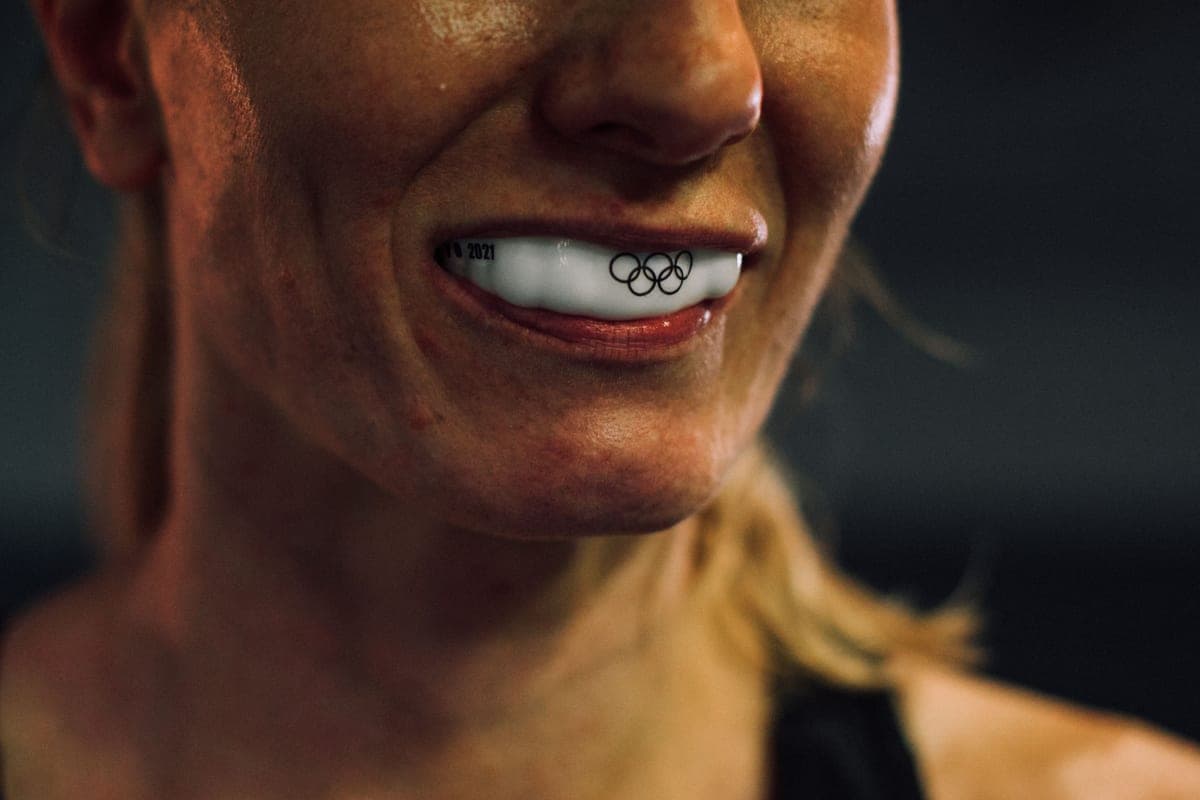
- A mouthguard, fitted properly. Cheap, required, first. The roundup.
- A partner and a coach who control power. Beginner sparring should be light and technical. If it is not, that is the thing to change — not the headgear.
- 16 oz gloves on both people. Sparring gloves have the soft padding for a face.
- Headgear that fits, for the cuts. Sized, not borrowed.
- Stopping when you are hurt. A headache, dizziness, nausea or confusion after sparring is a reason to stop and see a doctor, not to spar again next week.
Kids
The same answer, with a stronger emphasis on the coach. USA Boxing requires headgear in all divisions including developmental bouts for ages 8–12. A child hitting a bag at home needs none of it. See headgear for kids and boxing gear for kids.
Picks
If you are going to spar: the two purchases, in order
A mouthguard first, then headgear. These are the picks for the sparring case only — nothing on this page is needed for bag work.
Key specs
- Sizes
- Youth (10 & under) · Adult (11+)
- Fit
- Boil-and-bite
- Build
- Triple layer, gel-fit liner
Scores · editorial, out of 10
- Fit & retention
- 8
- Breathing & speech
- 6
- Protection thickness
- 9
- Ease of molding
- 8
- Value
- 9
Pick 01 · Mouthguards
Shock Doctor Gel Max Mouthguard
Shock Doctor
The safe default boil-and-bite: a triple-layer guard with a gel-fit liner and an exoskeletal frame, in youth and adult sizes, with a convertible strap you can leave off for boxing.
Best for
A first mouthguard for an adult or a child over 10 who wants a full-thickness guard
Pros
- Triple-layer design with Shock Doctor's gel-fit liner and a heavy-duty exoskeletal frame
- Two age-based sizes
- Convertible tether — strapped for helmet sports, strapless for boxing
- Shock Doctor lists a limited dental warranty; HSA/FSA eligible per the product page
Cons
- Not compatible with braces — Shock Doctor points braces wearers to its dedicated models
- Thicker than a SISU; breathing and speaking take a session to get used to
Specs from Shock Doctor — Gel Max Mouthguard (features, sizing, fitting).
Key specs
- Sizes
- S/M · L/XL
- Coverage
- Full cheeks, open top, mesh ears
- Closure
- T-Cross rear + chin strap
Scores · editorial, out of 10
- Coverage
- 8
- Vision
- 9
- Fit & adjustability
- 9
- Weight & breathability
- 8
- Value
- 7
Pick 02 · Headgear
Hayabusa T3 Boxing Headgear
Hayabusa
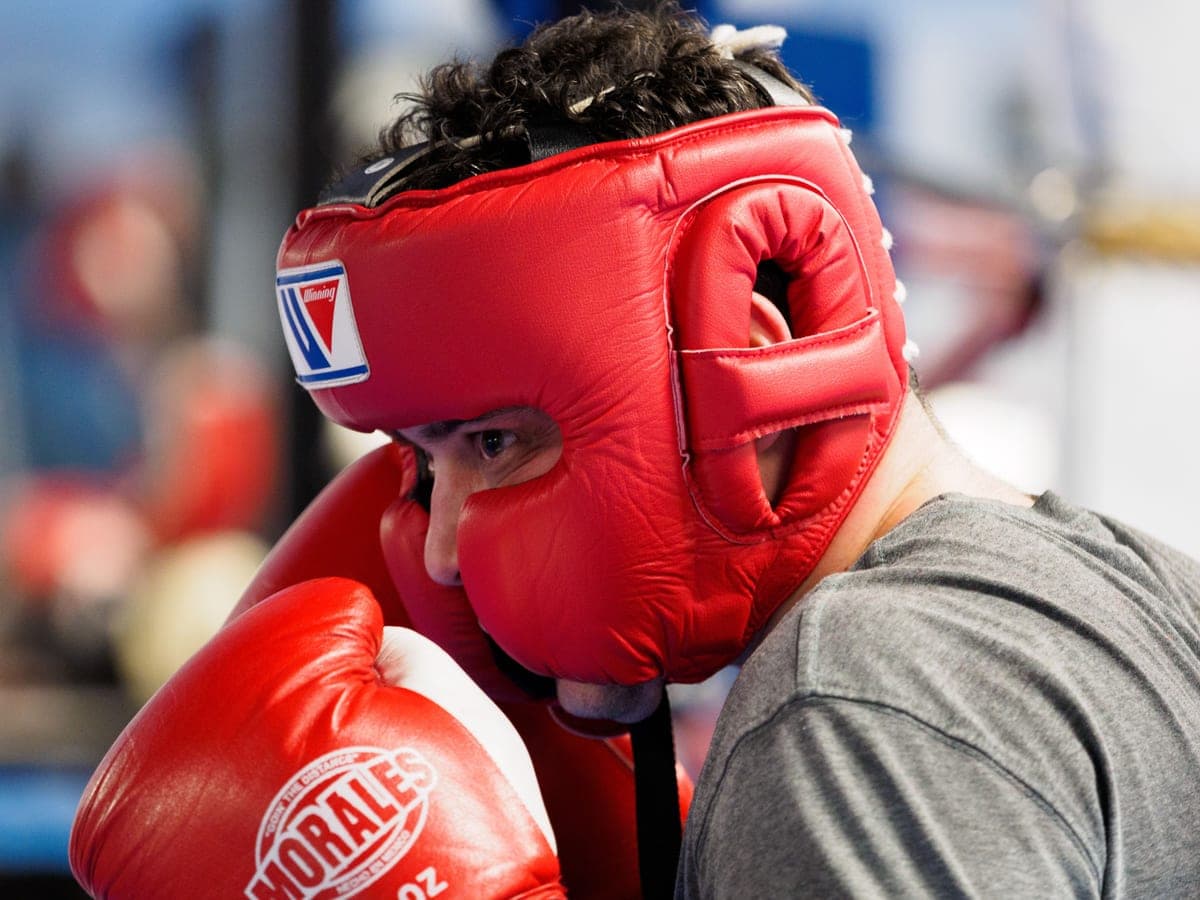
The beginner-friendly sparring default: full cheek coverage, an open top that breathes, and a T-Cross closure that stays put — the reason it is the first headgear most gyms hand a new sparrer.
Best for
A first pair of sparring headgear for an adult who wants cheek coverage without a face bar
Pros
- Mexican-style full cheek protection with an open-top design — Hayabusa lists it for beginner through advanced use
- Patented T-Cross closure plus chin strap: the two-point fit that keeps headgear from spinning on a hook
- Engineered (Vylar) leather outer with a multi-layer foam build and a soft lining — wipes clean between sessions
- Mesh ear coverings keep the ears covered while letting heat out
Cons
- No face bar — the nose is exposed to straight punches (that is the trade for vision)
- Only two size bands; measure your head before buying rather than guessing from hat size
Specs from Hayabusa — T3 Boxing Headgear (features and size guide).
FAQ
Frequently asked questions
Do you need headgear for a punching bag?
No. Nothing is hitting your head. Wraps and gloves are the bag-work protection.
Do you need headgear for sparring?
Yes — every gym requires it for training sparring, and USA Boxing requires it in all competition divisions (Rule 37.3).
Does boxing headgear prevent concussions?
Not according to the published evidence. Headgear reduces cuts; the study cited found head-blow stoppages fell when elite headgear was removed. No product here is presented as concussion protection.
Should I buy headgear or a mouthguard first?
The mouthguard — it is cheaper, required everywhere, and comes first in every gym's list.
Do kids need headgear for boxing?
For supervised class sparring and competition, yes. For bag work at home, no.
Next in your kit
Best mouthguard for boxing →Keep reading
Related guides
- Best mouthguard for boxing →
The first purchase.
- Best boxing headgear for beginners →
The second.
- How to size boxing headgear →
Fit is most of it.
- Boxing safety basics →
The rest of what coaches assume you know.
- Bag gloves vs sparring gloves →
16 oz, soft padding, for a face.
Sources
- —Loosemore M et al. Use of Head Guards in AIBA Boxing Tournaments — A Cross-Sectional Observational Study. Clin J Sport Med 2017;27(1):86–88 · doi.org
- —The Case for Protective Headguards in Amateur Boxing and Implications for International Policy on Headguard Bans (PMC, 2025) · ncbi.nlm.nih.gov
- —USA Boxing National Rule Book, effective January 1, 2025 — Rule 37 (Headgear), Rule 39 (Mouthpiece), Appendix G (braces release) · usamastersboxing.com
- —Shock Doctor — Gel Max Mouthguard (features, sizing, fitting) · shockdoctor.com
- —Hayabusa — T3 Boxing Headgear (features and size guide) · hayabusafight.com