Comparison · Protection
Shock Doctor vs SISU: Which Mouthguard for Boxing?
These are the two mouthguards a beginner actually ends up choosing between, and they take opposite approaches. Shock Doctor builds a thick, triple-layer boil-and-bite guard you can feel. SISU builds a thin perforated guard at 1.6 or 2.4 mm that you can talk and breathe through. Here is what each trade costs you, and which one belongs in a first sparring kit.
Written by Mike M. · Owner, Iron Mako Media
Published
Bag & Bell is reader-supported. Product links go through our affiliate resolver and we may earn a commission from qualifying purchases at no cost to you. Prices are the retailer's, come from Amazon's own product data on the date shown, and change — the button always opens the live listing.
Part of the Protection hub.
The short answer
For a first sparring mouthguard, buy the Shock Doctor Gel Max. A thick, triple-layer boil-and-bite guard with a gel-fit liner is the conventional choice for a reason: there is more material between your teeth and the impact, and "more material" is the entire mechanism a mouthguard works by. Buy the SISU Max instead if bulk is the thing stopping you from wearing a guard at all — a thin guard you actually wear beats a thick one in your bag — or if you have braces. Treat the SISU Aero as a bag-work and light drilling guard, not a sparring one.
What actually differs
| Shock Doctor Gel Max | SISU Max | SISU Aero | |
|---|---|---|---|
| Thickness | Full thickness, triple layer | 2.4 mm | 1.6 mm |
| Fitting | Boil-and-bite with gel-fit liner | Hot-water mould, remouldable | Hot-water mould, remouldable |
| Sizes | Youth (10 & under) · Adult (11+) | One moulded fit | Medium/Large adult · Small junior |
| Braces | Not the braces model — see the dedicated guards | Compatible | Adult: compatible |
| Talking and breathing | Restricted, as with any thick guard | Noticeably freer | Freest of the three |
| Best use | Sparring and anything with contact | Sparring, if you cannot tolerate bulk | Bag work and light drilling |
Thickness is the whole argument
A mouthguard works by putting a compressible layer between the teeth, spreading the load of an impact across the whole arch, and stopping the lower jaw slamming into the upper. All three of those depend on material. More material does more of each, which is why the thick-guard tradition exists and why every governing body that mandates a mouthpiece for competition is mandating a real one — USA Boxing requires a mouthpiece for all competition bouts under Rule 39.
SISU's counter-argument is that a perforated, closely-moulded thin guard distributes force through the arch rather than relying on bulk, and that a guard you are comfortable wearing is better than one you leave out. Both of those are reasonable. What we will not do is tell you a 1.6 mm guard protects the same as a full-thickness one in a hard round, because nothing published supports that.
Our position: start thick. If you genuinely cannot train with a thick guard — gagging, cannot breathe through combinations, cannot speak to a coach — then a 2.4 mm SISU Max is a sensible answer, and far better than training without one.
Fitting: boil-and-bite versus remouldable
Shock Doctor's Gel Max is a classic boil-and-bite: soften it in hot water, bite in, suck the air out, shape the edges with your fingers, then cool it in cold water. The gel-fit liner makes the mould more forgiving than a plain thermoplastic guard. You get essentially one good attempt, with maybe one rescue.
SISU's guards remould repeatedly — the company publishes up to twenty times — which is the single most underrated feature in this comparison. A first mould that ends up crooked, too high on the gum, or too loose at the back is not a wasted purchase; you reheat it and do it again. For a teenager whose mouth is still changing, or for anyone who has botched a boil-and-bite before, that matters a lot.
Either way, the fitting determines most of the protection. A guard that is loose enough to fall out, or moulded so the back teeth do not sit in it, is not doing its job. Our step-by-step fitting guide covers the process and the three most common ways it goes wrong.
Breathing, talking and the practical side
This is where SISU wins outright and it is not a trivial advantage. A thin perforated guard lets you answer a coach, count rounds out loud and breathe through your mouth during hard work without taking it out. A thick guard does not, and the habit of popping a guard out between rounds to speak is how people end up sparring with it in their glove.
The flip side is that a thin guard is easy to forget you are wearing, which is fine right up until someone lands a clean shot. Decide what you are protecting against before you optimise for comfort.
Braces
SISU's guards are listed as braces-compatible, and the remoulding matters here because orthodontic work changes the shape of your mouth repeatedly over a year or two. The Shock Doctor Gel Max is not the braces model — Shock Doctor makes dedicated braces guards with an instant pop-in fit and no boiling, in upper-only and upper-and-lower versions, which are the right product if you are in treatment.
Do not boil-and-bite a standard guard onto braces: it can lock onto the brackets and it is not designed to protect the soft tissue that braces cut. The full picture is in best mouthguard for boxing with braces.
Durability and replacement
Both wear out, and the usual signs are the same: visible thinning at the back teeth, tears at the edges, a guard that no longer stays put without being held by clenching, or any deformation that stops it seating. A thin guard reaches that point sooner than a thick one, simply because there is less material to lose.
Rinse it after every session, keep it in a vented case rather than a gym bag, and never leave it in a hot car — heat deforms every thermoplastic guard, including the ones that are supposed to be remoulded deliberately.
If neither suits
Two other directions are worth knowing about. A self-fit guard with an internal fitting aid — the OPRO Gold Level, for example — gets closer to a custom fit than a standard boil-and-bite without a dentist visit. And a genuinely custom guard made from a dental impression is the best protection available and costs accordingly. We weigh that up in boil-and-bite vs custom mouthguard, and the full field is in best mouthguard for boxing.
Picks
The three guards in this comparison
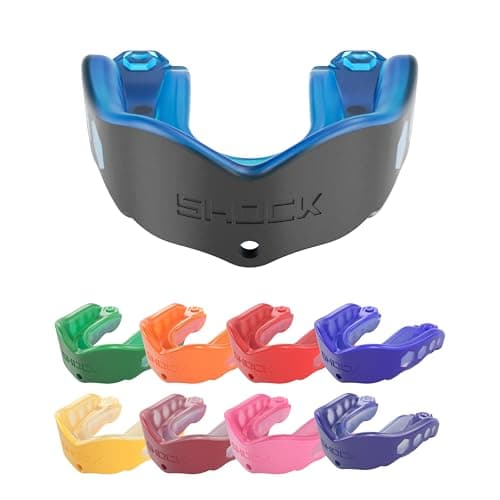
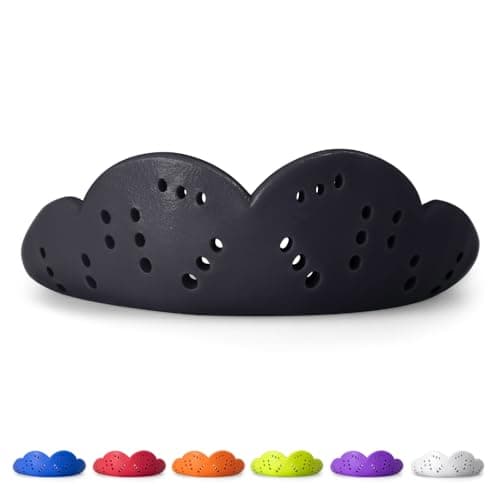
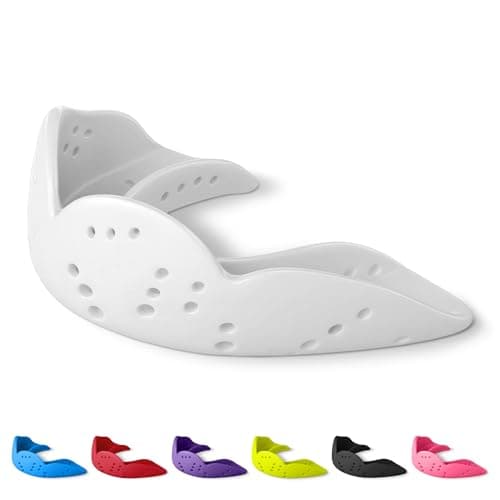
Shock Doctor's full-thickness boil-and-bite, SISU's 2.4 mm remouldable guard, and SISU's 1.6 mm — which is the thinnest of the three and the one with the clearest limits.
Key specs
- Sizes
- Youth (10 & under) · Adult (11+)
- Fit
- Boil-and-bite
- Build
- Triple layer, gel-fit liner
Scores · editorial, out of 10
- Fit & retention
- 8
- Breathing & speech
- 6
- Protection thickness
- 9
- Ease of molding
- 8
- Value
- 9
Pick 01 · Mouthguards
Shock Doctor Gel Max Mouthguard
Shock Doctor
The safe default boil-and-bite: a triple-layer guard with a gel-fit liner and an exoskeletal frame, in youth and adult sizes, with a convertible strap you can leave off for boxing.
Best for
A first mouthguard for an adult or a child over 10 who wants a full-thickness guard
Pros
- Triple-layer design with Shock Doctor's gel-fit liner and a heavy-duty exoskeletal frame
- Two age-based sizes
- Convertible tether — strapped for helmet sports, strapless for boxing
- Shock Doctor lists a limited dental warranty; HSA/FSA eligible per the product page
Cons
- Not compatible with braces — Shock Doctor points braces wearers to its dedicated models
- Thicker than a SISU; breathing and speaking take a session to get used to
Specs from Shock Doctor — Gel Max Mouthguard (features, sizing, fitting).
Key specs
- Thickness
- 2.4 mm
- Fit
- Hot-water mold, remoldable
- Braces
- Compatible
Scores · editorial, out of 10
- Fit & retention
- 8
- Breathing & speech
- 10
- Protection thickness
- 7
- Ease of molding
- 6
- Value
- 7
Pick 02 · Mouthguards
SISU Max 2.4 mm Mouthguard
SISU
The thin-guard option built for contact: 2.4 mm, braces-compatible, remoldable, and SISU's own recommendation for MMA and other high-impact sports.
Best for
Anyone who can't stand a bulky guard, and braces wearers who want a moldable option
Pros
- SISU's thickest guard at 2.4 mm — the one it recommends for MMA/BJJ, hockey and football
- Remoldable in hot water (SISU cites up to 20 times) as your fit changes
- Braces compatible, per SISU's comparison chart
- Thermoplastic material SISU rates as stronger than conventional guard material; dental warranty listed
Cons
- One adult size (athletes over 5 ft); the junior Aero Small is a different, thinner product
- The fit is unforgiving — a rushed mold feels loose, so follow the instructions exactly
Specs from SISU — product comparison chart (Aero, Max, Go, Junior).
Key specs
- Thickness
- 1.6 mm
- Sizes
- Medium/Large adult · Small junior
- Braces
- Adult: compatible
Scores · editorial, out of 10
- Fit & retention
- 8
- Breathing & speech
- 10
- Protection thickness
- 5
- Ease of molding
- 6
- Value
- 7
Pick 03 · Mouthguards
SISU Aero 1.6 mm Mouthguard
SISU
The thinnest SISU at 1.6 mm — easiest to talk and breathe through, but SISU itself lists it for lower-contact sports, so for boxing it is the light-sparring and bag-work option.
Best for
Bag work and very light drilling where you want to forget the guard is in
Pros
- 1.6 mm profile — talking, breathing and drinking with it in is the whole point
- Adult sizes are braces compatible, per SISU
- Remoldable in hot water; dental warranty listed
Cons
- SISU's own chart recommends it for lacrosse, soccer and basketball — the Max is its pick for high-impact sports
- The junior Aero Small is not braces compatible
Specs from SISU — product comparison chart (Aero, Max, Go, Junior).
FAQ
Frequently asked questions
Is Shock Doctor or SISU better for boxing?
Shock Doctor for a first sparring guard — a full-thickness triple-layer boil-and-bite puts more material between your teeth and the impact. SISU if bulk is what stops you wearing a guard at all, or if you have braces, in which case the 2.4 mm Max is the one to take.
Is a 1.6 mm mouthguard thick enough for boxing?
We would use it for bag work and light technical drilling, not for sparring. Protection comes from material, and 1.6 mm is the thinnest option here. If you want a thin guard for contact, the 2.4 mm version is the sensible floor.
Can you remould a SISU mouthguard?
Yes — SISU publishes up to twenty remoulds. That makes a botched first fit recoverable, which is a real advantage over a standard boil-and-bite where you effectively get one attempt.
Can you wear a Shock Doctor Gel Max with braces?
No, that is not the braces model. Shock Doctor makes dedicated braces guards with an instant pop-in fit and no boiling, in upper-only and upper-and-lower versions. Boiling a standard guard onto brackets is a bad idea.
Which mouthguard lets you breathe and talk?
The thin SISU guards, clearly. A full-thickness guard restricts both, which is the usual reason people take one out between rounds and then forget to put it back in.
How often should you replace a boxing mouthguard?
When it thins visibly at the back teeth, tears at the edges, or no longer seats without being held by clenching. Thin guards reach that point sooner than thick ones because there is less material to lose.
Next in your kit
Best boxing headgear for beginners →Keep reading
Related guides
- Best mouthguard for boxing →
The full field, beginners to braces.
- How to fit a boil-and-bite mouthguard →
Where the protection is actually decided.
- Boil-and-bite vs custom mouthguard →
Whether the dentist route is worth it.
- Best mouthguard for boxing with braces →
If you are in orthodontic treatment.
Sources
- —Shock Doctor — Gel Max Mouthguard (features, sizing, fitting) · shockdoctor.com
- —SISU — mouthguard comparison chart (Aero, Max, Go, Junior: thickness, sizes, braces) · sisuguard.com
- —Shock Doctor — Braces Mouthguard (fit, sizes, materials) · shockdoctor.com
- —USA Boxing National Rule Book, effective January 1, 2025 — Rule 37 (Headgear), Rule 39 (Mouthpiece), Appendix G (braces release) · usamastersboxing.com