Guide · Start Here
How to Start Boxing at Home: The First Week, the First Purchases, the First Month
You can start boxing at home tonight with no equipment — a stance, a jab, a cross and a timer on your phone. Here is that first week, then what to buy in what order, then the first month's plan once a bag arrives. And the three mistakes that end most home boxing by week three.
Written by Mike M. · Owner, Iron Mako Media
Published
Bag & Bell is reader-supported. Product links go through our affiliate resolver and we may earn a commission from qualifying purchases at no cost to you. Prices are the retailer's and change — every button opens the live price on Amazon rather than showing a stale number.
Part of the Start Here hub.
Week one: no equipment
Stance. Feet shoulder-width, lead foot forward (left foot if you are right-handed), rear heel slightly raised, knees soft, hands up at cheek height, elbows in, chin down. Stand in front of a mirror or prop your phone up and record.
The jab. The lead hand goes straight out and straight back, turning the fist over at the end so the palm faces down, the shoulder covering the chin. Slow, then faster. The rear hand stays on the cheek.
The cross. The rear hand goes straight out as the rear hip and foot turn toward the target, the rear heel lifting. Back to the cheek. Then jab-cross together.
Rounds. Set a phone timer to two minutes on, one off (app vs gym timer). Round 1: stance and footwork — step forward, back, left, right, keeping the stance. Rounds 2–3: jab and cross, moving. Round 4: rope if you have one, or more footwork. Four rounds. That is a session. Three or four days a week for the first week.
What to buy, in what order
| Order | Buy | Why now |
|---|---|---|
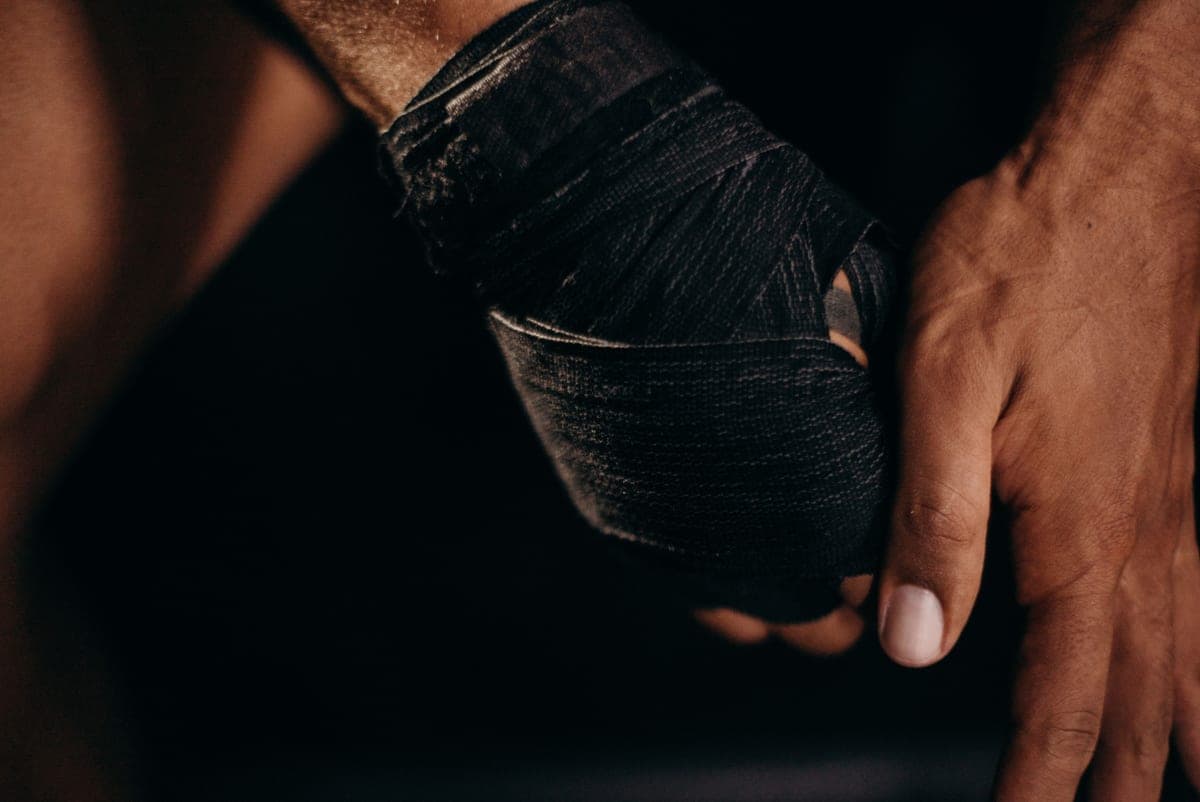
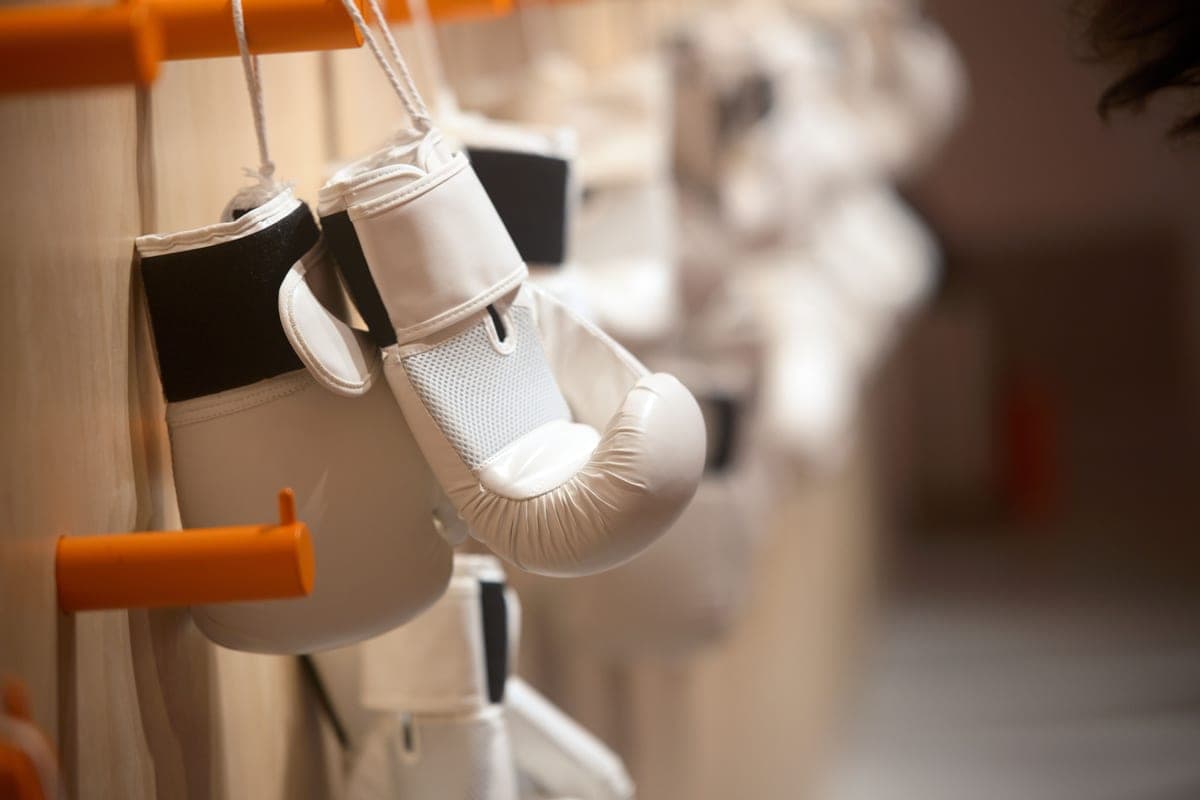
| 1 | Wraps and 14–16 oz gloves | You'll need them the day the bag arrives, and gloves make shadowboxing rounds honest |
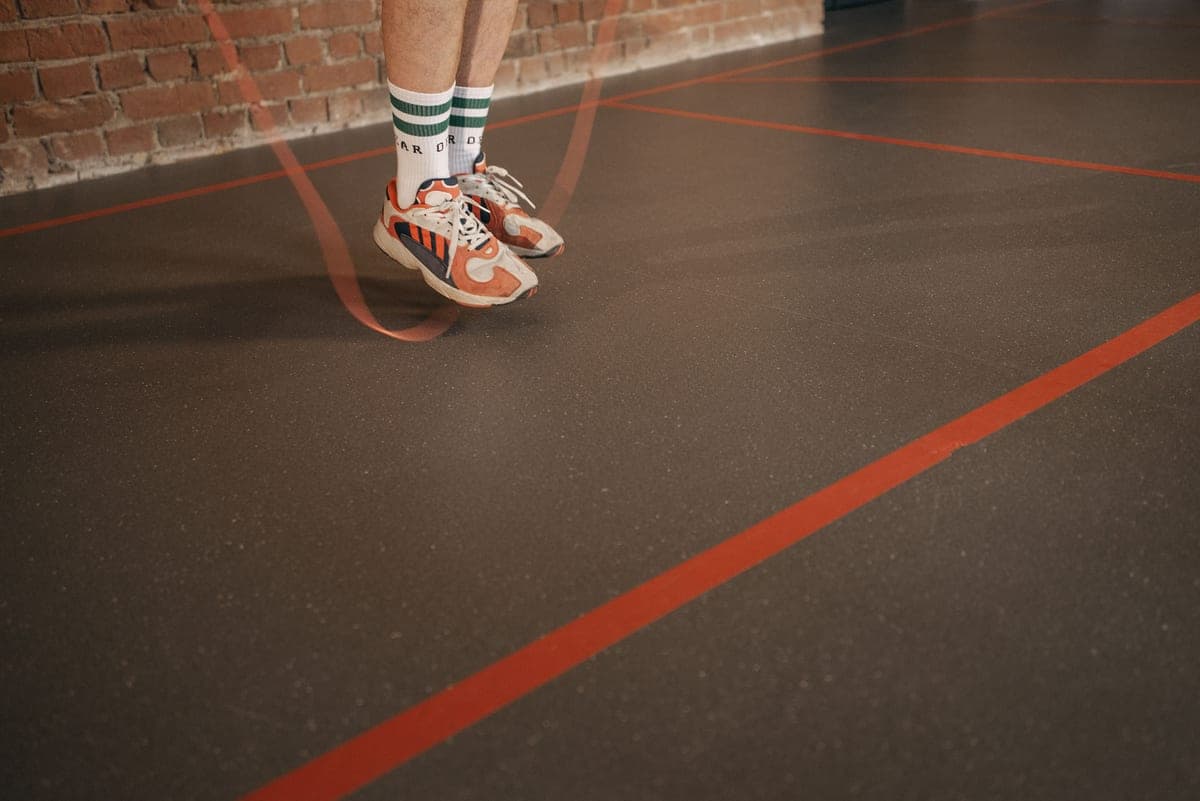
| 1 | A PVC jump rope | Cheap; the warm-up from day one |
| 2 | The bag — after measuring the room | Hanging if you can mount it; freestanding if you can't |
| 2 | The mount or stand | Decided by the ceiling, bought with the bag |
| 3 | A mouthguard | The week you decide to spar at a gym — not before |
| Later | A wall timer, headgear, a second glove | When the garage is set up; when you spar; when the first pair wears |
The full checklist with one pick per item is boxing equipment for beginners; the room decision is freestanding vs hanging.
Month one: with a bag
Six rounds, two minutes on, one off, three or four days a week. Rounds 1–2 rope (the rope workout). Round 3 shadowboxing — jab, cross, movement. Rounds 4–5 the bag — jab and cross only in week one, adding the lead hook in week three, technique over power every round. Round 6 rope or shadowboxing to finish. Move to three-minute rounds when you can finish a two-minute round the way you started it (timer settings).
Starting with a punching bag and nothing else
If the bag came first — a gift, a move-in leftover — do week one without it. Wraps and gloves before the first punch; there is no version of hitting a bag bare-handed that ends well (why). Check the mount before you trust it (how).
The three things that end home boxing by week three
- Bare-knuckle bag work. Split knuckles, sore wrist, done. Wraps and gloves.
- Thirty-minute first sessions. Shoulders and calves so sore the second session never happens. Four rounds. Six by month one.
- A bag bought before the ceiling was checked. It sits on the floor for a month. Measure first.
When to find a gym
Home boxing teaches the bag and the rope. It does not teach defense, timing against a moving person, or whether your form is right — a coach does, in one session, what a month of videos cannot. Most people who keep boxing at home also join a gym for a class a week within the first few months; the home setup is what makes the class useful. The day you spar there, read boxing safety basics and when you need headgear.
Picks
The first purchases, in order
Wraps and gloves first, a rope in the same order, and — once you have measured the room — a bag. The freestanding pick is shown here because it fits the most homes; the hanging pick is on the checklist.
Key specs
- Length
- 180 in (4.5 m)
- Fabric
- Stretch cotton-polyester blend
- Closure
- Hook-and-loop, wide-mouth thumb loop
Scores · editorial, out of 10
- Support & elasticity
- 9
- Length options
- 7
- Thumb loop & closure
- 9
- Wash durability
- 8
- Value
- 9
Pick 01 · Hand wraps
Everlast Elite Hand Wraps (180 in)
Everlast
The default adult wrap: 180 inches of stretchy cotton-poly, a wide-mouth thumb loop, hook-and-loop, machine washable.
Best for
Every adult's first wraps
Pros
- 180 in covers Mexican-style wrapping with knuckle padding for adult hands
- Wide-mouth thumb loop is easier to start than a narrow one
- Machine washable — you will wash these every week
Cons
- Only 180 in; buy the Core 120 in for small hands or kids
- Stretch wraps loosen slightly as they age
Specs from Everlast — Elite Hand Wraps 180 in (specs).
Key specs
- Weights
- 8 · 12 · 14 · 16 oz
- Closure
- Full-length hook-and-loop, splint-style wrist
- Padding
- Triple-layer C3 foam
Scores · editorial, out of 10
- Wrist support
- 8
- Knuckle padding
- 8
- Fit & closure for beginners
- 9
- Materials & durability
- 6
- Value for a first pair
- 9
Pick 02 · Boxing gloves
Everlast Elite Boxing Gloves
Everlast
The safe default first pair: a full-length hook-and-loop strap with a splint-style wrist, triple-layer foam, and a published weight chart to size it by.
Best for
A first pair for bag work, sized by body weight
Pros
- Everlast publishes a weight-to-ounce chart for this glove (12–14 oz at 101–150 lb, 14–16 oz at 151–175 lb, 16–18 oz over 175 lb)
- EverShield wedge-shaped strap runs the full length of the wrist — easy to close one-handed
- Mesh palm and soft lining make it comfortable for the 30-minute sessions a beginner actually does
- Attached thumb and a foam grip bar encourage a correct fist
Cons
- PVC outer shell rather than leather — expect it to show wear sooner than a leather pair
- No 10 oz option; the jump from 8 oz to 12 oz skips the size some smaller adults want
Specs from Everlast — Elite Boxing Gloves (specs and size chart).
Key specs
- Rope
- 2.8 oz PVC, tangle-free
- Lengths
- Up to 6 ft 2 in · over 6 ft 2 in
- Handles
- Grip-taped
Scores · editorial, out of 10
- Cable & speed for beginners
- 10
- Handles & bearings
- 7
- Adjustability
- 7
- Durability on concrete
- 6
- Value
- 8
Pick 03 · Jump ropes
BOXROPE Vol. I
BOXROPE
The rope built for boxers first: a 2.8 oz PVC rope heavy enough to feel and time, taped handles, and two length options — the best starting rope if footwork rounds are the goal.
Best for
Learning boxing footwork and rhythm — the rope you can feel turning
Pros
- A heavier PVC rope (2.8 oz) gives a beginner the feedback a thin steel cable doesn't — you can hear and feel the turn
- Two sizes by height; BOXROPE lists it as tangle-free
- Handle grip tape for control when hands are sweaty
Cons
- PVC wears faster on bare concrete than a coated cable — jump on a mat or rubber floor
- Only two length bands; you trim to fit within each
Specs from BOXROPE — Vol. I (rope weight, sizes).
Key specs
- Height
- 47–68 in, seven settings
- Base
- ~250 lb filled with water
- Shell
- 18 oz vinyl over high-density foam
Scores · editorial, out of 10
- Base stability when filled
- 7
- Footprint
- 7
- Rebound & feel
- 7
- Height adjustability
- 9
- Value
- 7
Pick 04 · Freestanding bags
Century Original Wavemaster
Century
Seven height settings from 47 to 68 in on a base that fills to about 250 lb — the adjustable one for shared households.
Best for
A household where an adult and a teenager share one bag
Pros
- Seven height adjustments — the XXL has none
- Water or sand fill; rounded base rolls for storage
- Smaller footprint than the XXL
Cons
- Narrower striking surface than the XXL
- Lighter base moves more under hard hooks
Specs from Century — Original Wavemaster (specs).
FAQ
Frequently asked questions
Can I learn boxing at home by myself?
The bag and rope parts, yes — stance, jab, cross, footwork, conditioning. Defense and timing need a partner and a coach; most home boxers add a weekly class within a few months.
How do I start boxing at home with no equipment?
Stance, jab and cross in a mirror, shadowboxing rounds on a phone timer, footwork drills. Four two-minute rounds, three days a week for the first week.
What do I need to start boxing at home?
Wraps, 14–16 oz gloves and a rope first; a bag and its mount once the room is measured; a mouthguard the week you spar. See the equipment checklist.
How often should a beginner box at home?
Three or four sessions a week of four to six short rounds. More sessions, not longer ones.
How long does it take to learn boxing basics?
A month of rounds gets a beginner a clean jab, cross and stance on a bag. Everything after that is a gym question.
Next in your kit
Boxing equipment for beginners →Keep reading
Related guides
- Boxing equipment for beginners →
The purchases, one pick each.
- Jump rope workout for boxing beginners →
Rounds one and two.
- Round timer settings for beginners →
The session structure.
- Freestanding vs hanging bag →
The room decision before the bag.
- Boxing safety basics →
What coaches assume you know.
Sources
- —Everlast — Elite Hand Wraps 180 in (specs) · everlast.com
- —Everlast — Elite Boxing Gloves (specs and size chart) · everlast.com
- —BOXROPE — Vol. I (rope weight, sizes) · boxrope.com
- —Century — Original Wavemaster (specs) · centurymartialarts.com