Guide · Start Here
What to Bring to Your First Boxing Class
Water, a towel, and clothes you can move in. That is genuinely it for a trial class — almost every gym loans gloves for your first session, and nobody is sparring on day one. Here is the short packing list, what to wear, the things the gym supplies, and the order to buy your own kit in once you know you are going back.
Written by Mike M. · Owner, Iron Mako Media
Published
Bag & Bell is reader-supported. Product links go through our affiliate resolver and we may earn a commission from qualifying purchases at no cost to you. Prices are the retailer's, come from Amazon's own product data on the date shown, and change — the button always opens the live listing.
Part of the Start Here hub.
The packing list
| Item | Day one? | Note |
|---|---|---|
| Water | Yes | A full bottle. Boxing classes are hotter than they look |
| Towel | Yes | Small one. You will need it in the first ten minutes |
| Clothes you can move in | Yes | T-shirt, shorts or leggings. Nothing you mind sweating through |
| Flat trainers | Yes | Any flat-soled shoe. Not running shoes if you own an alternative |
| Hand wraps | If you own them | Bring them. If not, ask - many gyms sell them at the desk |
| Gloves | If you own them | Most gyms loan a pair for a trial. Call and check |
| Mouthguard | No | Only once you spar. Nobody spars on day one |
| Headgear | No | Same - sparring kit, not beginner kit |
| Boxing shoes | No | Months away, and optional even then |
That is the whole list. The reason it is so short is that a first class is almost always shadowboxing, footwork, pad work or bag rounds — none of which needs equipment you do not already own, except gloves, and the gym has gloves.
Call the gym and ask two questions
Thirty seconds on the phone saves the two most common first-class problems:
- "Do you loan gloves for a trial class?" Most do. Some ask you to bring your own wraps for hygiene, which is reasonable and cheap to solve. If they do not loan gloves, that is the one thing you have to buy before you go — see the picks below.
- "Is the first class beginners only, or mixed?" A mixed class is fine, but it tells you to expect to be the slowest person in the room for an hour, which is much easier when you were expecting it.
What to wear
- A t-shirt you do not care about. Not a vest if you would rather not have wraps and gloves rubbing on bare shoulders.
- Shorts or leggings. Anything you can pivot and bend in. Avoid long loose trousers — they catch when you move your feet.
- Flat shoes. Any flat trainer beats a cushioned running shoe, because boxing footwork is lateral and a soft, raised heel rolls under you. If you own court, skate or wrestling shoes, wear those: boxing shoes vs wrestling shoes explains why they are closer to right, and you do not need actual boxing shoes for months, if ever.
- Nothing on your hands yet. If you own wraps, bring them. If not, the coach will show you what to buy.
- No jewelry. Rings and watches come off before gloves go on.
What the gym almost certainly provides
Bags, pads, a timer calling the rounds, and loan gloves. What gyms generally do not provide is hand wraps, because they sit against your skin, and nobody lends a mouthguard for obvious reasons. That is the whole split, and it is why the buying order further down starts with wraps.
What the class will actually be
It varies, but a typical beginner hour runs: a warm-up with skipping or shadowboxing, a technique block on one or two punches, rounds on the bag or the pads, and conditioning at the end. The timer runs the session in rounds, usually two or three minutes with a minute of rest, which is the same structure we use in the beginner heavy bag workout and in round timer settings. Expect to be tired in the warm-up, which is normal and not a verdict on your fitness — boxing is a different kind of tired.
The buying order, after you decide to go back
This is the part people get wrong, usually by buying a full kit before the second class. The order that wastes the least money:
- Hand wraps. Cheap, personal, and the gym will not lend them. 180 in for an adult hand. Learn to use them from our wrapping guide — and buy two pairs so one is always dry (washing them takes a day).
- Gloves, in the right weight. After two or three classes you will know whether you are staying. 14 oz is the default for most adults for class and bag work; size by body weight from the glove size chart, and best gloves for beginners has the picks. Do not buy a sparring glove yet.
- A mouthguard. The moment anybody mentions sparring, and not before. Boil-and-bite is fine; the mouthguard roundup ranks them on whether they stay in.
- Headgear, only if your gym requires it for sparring. Many do. When you need headgear is the honest version, and the first sparring kit checklist is the whole list for that stage.
Everything else — shoes, a rope, a bag at home — comes later and some of it never comes at all. If you are already thinking about training at home between classes, start with the beginner equipment checklist and how to start boxing at home rather than buying a bag in week one.
Mistakes people make before class one
- Buying a complete kit. Gloves you have not sized, headgear you will not use for months, a bag you have nowhere to hang. Buy wraps.
- Buying 16 oz gloves because they are the most padded. Weight is matched to your body weight and use, not to caution.
- Wearing cushioned running shoes. The soft raised heel is exactly wrong for pivoting.
- Skipping the phone call. Two questions, thirty seconds, no surprises at the desk.
- Trying to keep up in the warm-up. Pace it. Nobody is judging the new person for pausing.
- Not eating, or eating a full meal. Something light an hour or two before.
If the class is at home instead
Plenty of people start on YouTube in a garage rather than in a gym, and the kit list is different because nothing is loaned: wraps, gloves and something to hit are all on you. Garage boxing gym setup and what a home setup costs cover that route, and the bag end of it starts at punching bags under $200.
Picks
The first three things to buy, in this order
Not for day one — for the day you decide you are going back. Wraps first because they are cheap and personal, then gloves in your weight, then a mouthguard before anyone talks about sparring.
Key specs
- Length
- 180 in (4.5 m)
- Fabric
- Stretch cotton-polyester blend
- Closure
- Hook-and-loop, wide-mouth thumb loop
Scores · editorial, out of 10
- Support & elasticity
- 9
- Length options
- 7
- Thumb loop & closure
- 9
- Wash durability
- 8
- Value
- 9
Pick 01 · Hand wraps
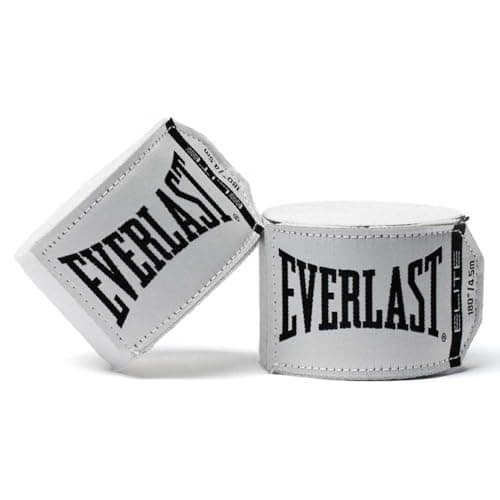
Everlast Elite Hand Wraps (180 in)
Everlast
The default adult wrap: 180 inches of stretchy cotton-poly, a wide-mouth thumb loop, hook-and-loop, machine washable.
Best for
Every adult's first wraps
Pros
- 180 in covers Mexican-style wrapping with knuckle padding for adult hands
- Wide-mouth thumb loop is easier to start than a narrow one
- Machine washable — you will wash these every week
Cons
- Only 180 in; buy the Core 120 in for small hands or kids
- Stretch wraps loosen slightly as they age
Specs from Everlast — Elite Hand Wraps 180 in (specs).
Key specs
- Weights
- 8 · 12 · 14 · 16 oz
- Closure
- Full-length hook-and-loop, splint-style wrist
- Padding
- Triple-layer C3 foam
Scores · editorial, out of 10
- Wrist support
- 8
- Knuckle padding
- 8
- Fit & closure for beginners
- 9
- Materials & durability
- 6
- Value for a first pair
- 9
Pick 02 · Boxing gloves
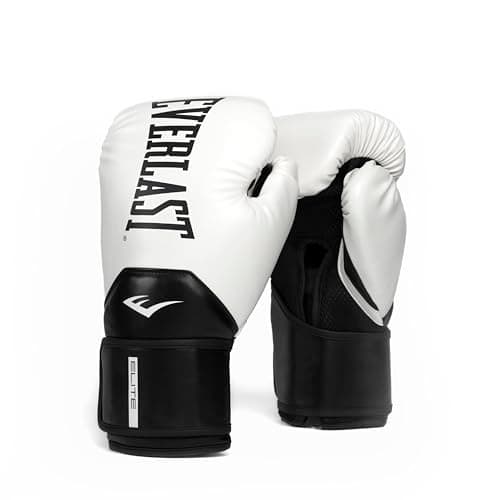
Everlast Elite Boxing Gloves
Everlast
The safe default first pair: a full-length hook-and-loop strap with a splint-style wrist, triple-layer foam, and a published weight chart to size it by.
Best for
A first pair for bag work, sized by body weight
Pros
- Everlast publishes a weight-to-ounce chart for this glove (12–14 oz at 101–150 lb, 14–16 oz at 151–175 lb, 16–18 oz over 175 lb)
- EverShield wedge-shaped strap runs the full length of the wrist — easy to close one-handed
- Mesh palm and soft lining make it comfortable for the 30-minute sessions a beginner actually does
- Attached thumb and a foam grip bar encourage a correct fist
Cons
- PVC outer shell rather than leather — expect it to show wear sooner than a leather pair
- No 10 oz option; the jump from 8 oz to 12 oz skips the size some smaller adults want
Specs from Everlast — Elite Boxing Gloves (specs and size chart).
Key specs
- Sizes
- One size (adult)
- Fit
- Boil-and-bite, gel frame
- Certification
- CE (SATRA M33:2011)
Scores · editorial, out of 10
- Fit & retention
- 8
- Breathing & speech
- 8
- Protection thickness
- 8
- Ease of molding
- 8
- Value
- 8
Pick 03 · Mouthguards
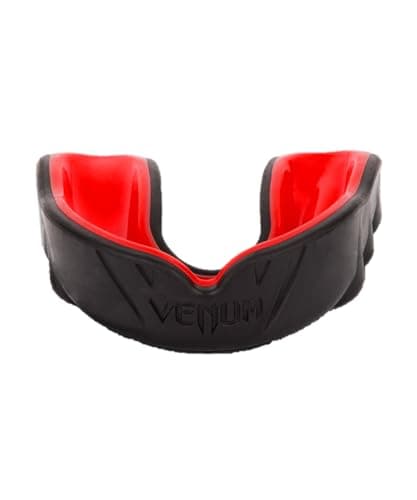
Venum Challenger Mouthguard
Venum
A boxing-brand boil-and-bite with a gel frame, a breathing channel, a rubber lower frame that spreads the bite, a case in the box, and a CE certificate — the sensible mid-price pick.
Best for
A boxing-first mouthguard with a case, for the adult who wants one purchase to cover bag work and sparring
Pros
- Nextfit gel frame with a breathing channel — Venum designed it to keep air moving between rounds
- High-density rubber lower frame that Venum says diffuses bite force toward the strongest teeth
- Protective case included; latex free
- CE certified to SATRA M33:2011, per Venum
Cons
- One adult size, no youth version listed
- No braces note on the product page — treat it as not braces compatible
Specs from Venum — Challenger Mouthguard (features, certification).
FAQ
Frequently asked questions
What do I need for my first boxing class?
Water, a towel, and clothes you can move in. Bring hand wraps and gloves if you own them; most gyms loan gloves for a trial class, so call and ask rather than buying a pair the night before.
Do I need my own gloves for a first boxing class?
Usually not — loan gloves are standard for trial sessions. Some gyms ask you to bring your own hand wraps for hygiene, which cost very little. Buy your own gloves after two or three classes, once you know you are staying.
What should I wear to my first boxing class?
A t-shirt, shorts or leggings, and flat shoes. Avoid cushioned running shoes if you own anything flatter — boxing footwork is lateral and a soft raised heel rolls under you. Leave rings and watches at home.
Do I need a mouthguard for my first boxing class?
No. Mouthguards are for sparring, and you will not be sparring on day one — a reputable gym will not put a beginner into contact. Buy one when sparring is actually on the table.
Will I spar in my first boxing class?
No, and you should not. First classes are shadowboxing, footwork, pads and bag rounds. If a gym offers a beginner contact sparring on day one, try a different gym.
What should I buy first after my first class?
Hand wraps — cheap, personal, and the one thing gyms do not lend. Then gloves in the right weight once you have been a few times, then a mouthguard before any sparring.
Next in your kit
Best hand wraps for boxing →Keep reading
Related guides
- Boxing equipment for beginners →
The home-training version of this list.
- How to wrap your hands →
The first skill, and the first purchase.
- Boxing glove size chart →
Sizing your own pair after a few classes.
- First sparring kit checklist →
What changes when contact starts.
- How to start boxing at home →
If there is no gym nearby.
Sources
- —Everlast — Elite Hand Wraps 180 in (specs) · everlast.com
- —Everlast — Elite Boxing Gloves (specs and size chart) · everlast.com
- —Venum — Challenger Mouthguard (features, certification) · venum.com