Beginner picks · Heavy Bags
Best Focus Mitts: 6 Pairs Ranked for Pad Work at Home
Focus mitts are the only piece of boxing gear you buy for somebody else's hands. The person holding takes every punch you throw, so this list is weighted toward padding and hand fit rather than how good the mitt looks catching a hook. Six currently-sold pairs, scored on one published rubric, with the honest reason to skip each.
Written by Mike M. · Owner, Iron Mako Media
Published
Bag & Bell is reader-supported. Product links go through our affiliate resolver and we may earn a commission from qualifying purchases at no cost to you. Prices are the retailer's, come from Amazon's own product data on the date shown, and change — the button always opens the live listing.
Part of the Heavy Bags hub.
Quick picks
| # | Product | Best for | Score | Price |
|---|---|---|---|---|
| 01 | 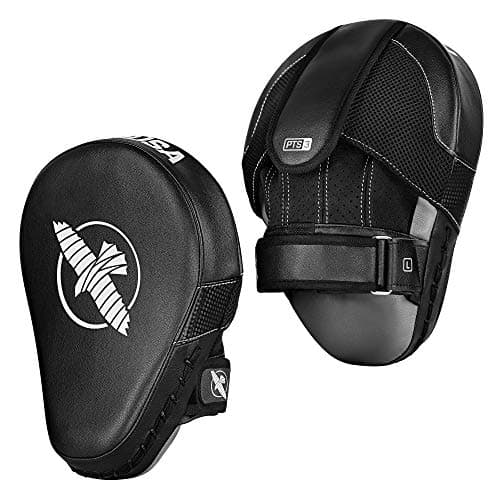 Hayabusa PTS 3 Focus Mitts (Standard) The best-documented mitt on this page: a teardrop target 10 in tall, 7.5 in wide and 2 in deep at 12 oz, with a reinforced spine Hayabusa says holds the curve and stops the foam breaking down. | The pair you keep — regular pad rounds with a partner who punches hard | 8.8 | |
| 02 |  Fairtex FMV9 Contoured Focus Mitts The holder's mitt: an ergonomic contoured hand compartment Fairtex says reduces wrist strain, extra-soft interior padding against jammed fingers, and a snug leather wrist band — handmade in Thailand, at the top of this page's price range. | Whoever ends up holding pads every session and wants their wrists to survive it | 8.7 | |
| 03 | 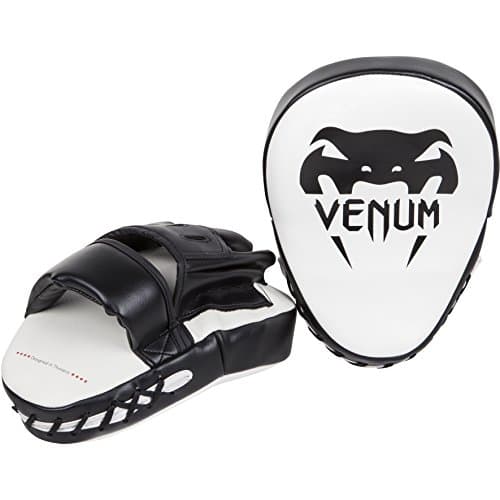 Venum Light Focus Mitts The pair to hand a partner who has never held pads: ultra-light semi-leather with a pro-concave face, a curved shape and a multi-density foam system, at a mid-tier price and a published size. | A first pair for two people taking turns, where whoever holds is a beginner too | 8.2 | |
| 04 | 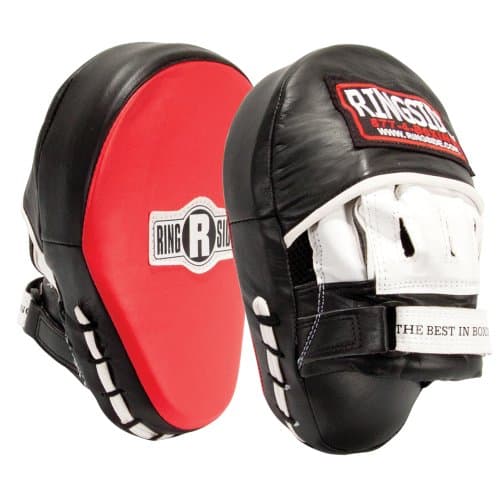 Ringside Super Guard Leather Punch Mitts The deepest pad here: leather over 2.25 in of layered foam, with an adjustable wrist strap and a finger hood over the fingertips — the mitt to hold when the person punching does not control their power yet. | The holder who keeps getting their fingers caught, and anyone catching hard crosses | 8.1 | |
| 05 | 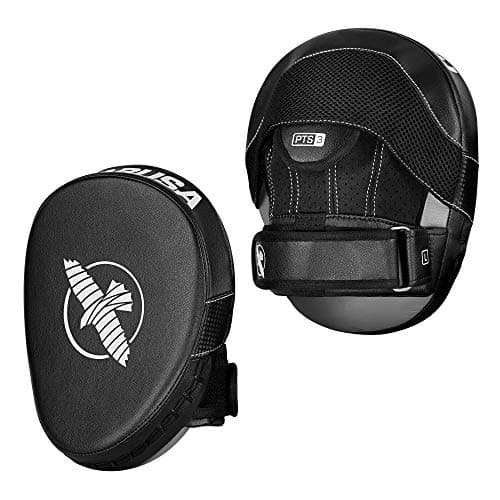 Hayabusa PTS 3 Micro Focus Mitts A 7 in target at 9.4 oz with an air pocket that pops when the punch lands clean — the precision mitt, not the beginner mitt. | Accuracy and speed drills, once both of you can already hold pads properly | 7.5 | |
| 06 | 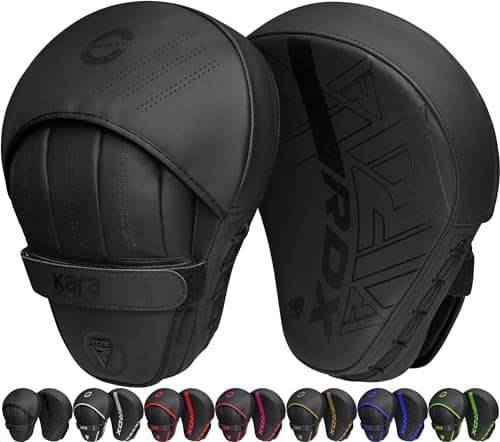 RDX Kara Curved Focus Mitts The cheapest pair here we would still put on a partner's hands: the Kara Maya Hide shell on a curved hook-and-jab target, with an adjustable strap and ventilation through the pad. | A second pair, or a first pair when the budget is going on gloves and a bag | 7.2 |
Scores are our editorial judgment from each model's published specs, size charts and manuals, weighted for what a first home setup needs.
The short answer
Who focus mitts are actually for
Two people. That is the whole qualification, and it is the reason most home setups should not buy mitts first. A heavy bag works alone; a focus mitt needs somebody standing in front of you holding it, which means the real question is not “which mitts” but “is there a second person in this house who will do this twice a week.” If the answer is no, the money belongs in a double end bag or a reflex bag, which both do the moving-target job without a partner.
If the answer is yes, mitts are the best value in this hub. A pair costs less than almost any bag, stores in a drawer, needs no ceiling joist and no floor space, and trains the two things a heavy bag cannot: punching at a target that moves on somebody else's timing, and throwing combinations that end where you are told rather than where you planned. They are also the most common piece of boxing equipment a beginner gets hurt on, because almost nobody is taught how to hold them.
What actually fails on a focus mitt
Not the shell. The padding and the hand fit — in that order, and both of them fail onto the person holding.
| Failure | What it feels like | The spec that prevents it |
|---|---|---|
| Foam packs down in the middle | Punches start arriving in the holder's palm; the mitt feels like a board | Layered or multi-density foam, and a reinforced spine, rather than one sheet of foam |
| The mitt slides on the hand | The holder clenches to keep it on, and the wrist takes the punch instead of the arm | An adjustable wrist strap or a snug wrist band, not just an elastic slip-on |
| Fingers catch the punch | Jammed or bent-back fingertips — the most common pad-work injury there is | A finger hood, or an interior deep and soft enough to keep the fingers out of the strike zone |
| The curve flattens out | A flat mitt deflects hooks badly and torques the holder's wrist | A pre-curved build with a reinforced spine holding the shape |
| The target is too small for the puncher | Misses land on the holder's hand, the forearm, or nothing at all | A full-size target for beginners; save the micro mitts for later |
The criteria, before the mitts
Every focus mitt on this site is scored on the same published rubric, and the order below is the rubric's output rather than a brand ranking. The five metrics and their weights:
| Metric | Weight | What it measures |
|---|---|---|
| Impact absorption for the holder | 30% | Published foam depth, layering and construction — how much of the punch the pad eats |
| Hand fit & strap security | 25% | Wrist strap or band, interior padding, finger protection, how well it stays put |
| Target size & shape for a beginner pair | 20% | Published dimensions and shape, judged against how accurately a beginner actually punches |
| Materials & durability | 15% | Shell material and build, as published |
| Value | 10% | What the build gives you for its tier |
Absorption and hand fit together carry 55%, for the reason in the table above: those are the two specs that decide whether the person holding can still hold next week. Value carries the least here of any category on the site, because focus mitts are cheap relative to everything else in a home setup — the gap between the cheapest and the most expensive pair on this page is less than the gap between two heavy bags, and buying the thin pair to save it is a false economy paid for by somebody else's hands.
Mitt sizes, in plain terms
Focus mitts come in roughly three sizes, and the names are not standardized between brands. Full-size mitts — the Hayabusa PTS 3, the Ringside Super Guard, the Fairtex FMV9 — are around 9 to 11 in tall and are what a beginner needs: a big target forgives a punch that lands two inches off. Compact mitts like the Venum Light sit just under that, light enough that the holder's shoulders last a full round. Micro mitts, like the Hayabusa PTS 3 Micro at 7 in, are precision tools for people who already hit what they aim at.
Depth matters more than height, and almost nobody publishes it. Two inches is normal; the 2.25 in on the Ringside Super Guard is deep; anything under about an inch and a half is a fitness-class mitt rather than a boxing one. Where a maker publishes nothing at all about padding depth, we say so in the card and score it down — you are being asked to trust a pad with somebody's wrists.
A note on prices
We never write a dollar figure into our copy — prices move constantly and a stale number is worse than none, so each card's button opens the live listing instead. In plain terms: the RDX Kara sits at the entry tier, the Venum Light and the Ringside Super Guard sit in the middle, the two Hayabusa pairs sit above that, and the Fairtex FMV9 is the premium end of this page by a wide margin. Focus mitts are one of the few categories where the entry tier is genuinely usable — the gap in money is small and the gap in function is smaller than it is in gloves or bags.
How this list was built
We read each manufacturer's own product page for dimensions, padding, closure and materials, and where a manufacturer publishes nothing — which happens on two of these six, and it is a mark against them in our scoring — we say so and cite the live Amazon listing instead. Every pair was confirmed as currently sold with a buyable offer before it went on this page. We have not impact-tested anything and never will: that takes a lab, and a site claiming it has measured the foam in six focus mitts is making it up. No claim here about what a mitt protects goes beyond what the maker or the listing states.
The picks in detail
Every pick, reviewed
Key specs
- Size
- 10 in H x 7.5 in W x 2 in deep
- Weight
- 12 oz
- Build
- Teardrop shape, reinforced spine
Scores · editorial, out of 10
- Impact absorption for the holder
- 9
- Hand fit & strap security
- 9
- Target size & shape for a beginner pair
- 9
- Materials & durability
- 9
- Value
- 7
Pick 01 · Focus mitts · REF HEA-01
Hayabusa PTS 3 Focus Mitts (Standard)
Hayabusa
The best-documented mitt on this page: a teardrop target 10 in tall, 7.5 in wide and 2 in deep at 12 oz, with a reinforced spine Hayabusa says holds the curve and stops the foam breaking down.
Best for
The pair you keep — regular pad rounds with a partner who punches hard
Why it is #1. It is the only mitt on this page that tells you everything: 10 in tall, 7.5 in wide, 2 in deep, 12 oz per mitt. That matters because every other decision here — can my partner hold this for three rounds, will my punch find it, is there enough pad between the punch and their palm — is a question about those four numbers. The build answers the durability question too: Hayabusa states a reinforced spine whose purpose is to hold the curve and prevent foam breakdown, which is precisely the failure that ends cheap mitts, and the teardrop shape is there to reduce wrist torque when a punch lands off-center. At 12 oz it is light for a full-size mitt, so the holder's shoulders are not the limiting factor. The honest cons: it sits near the top of this page on price and a beginner pair will not use the build up; Hayabusa does not publish the shell material or the foam layup, so you are trusting the shape rather than the specification; and it is one size only, which means a smaller-handed holder gets a looser fit than they would from the strapped mitts here.
Pros
- Hayabusa publishes height, width, depth and weight — the fullest spec sheet of any mitt here
- A reinforced spine whose stated job is to hold the curve, which is exactly how cheap mitts die
- Teardrop shape, which Hayabusa says helps avoid wrist torque when a punch lands off-center
- 12 oz per mitt is light for the size, so the holder's arms are not the limit on a long round
Cons
- Near the top of this page on price, and a beginner pair will not use the build up
- Hayabusa does not publish the shell material or the foam layup on the product page
- One size only — smaller hands get a loose fit and there is no alternative
Specs from Hayabusa — PTS3 Focus Mitts (dimensions, weight, teardrop shape, reinforced spine).
Key specs
- Hand compartment
- Ergonomic, contoured
- Interior
- Extra-soft padded hand compartment
- Wrist
- Snug-fit padded wrist band
Scores · editorial, out of 10
- Impact absorption for the holder
- 9
- Hand fit & strap security
- 10
- Target size & shape for a beginner pair
- 8
- Materials & durability
- 10
- Value
- 4
Pick 02 · Focus mitts · REF HEA-02
Fairtex FMV9 Contoured Focus Mitts
Fairtex
The holder's mitt: an ergonomic contoured hand compartment Fairtex says reduces wrist strain, extra-soft interior padding against jammed fingers, and a snug leather wrist band — handmade in Thailand, at the top of this page's price range.
Best for
Whoever ends up holding pads every session and wants their wrists to survive it
The one built for the person holding. Read the FMV9's published feature list and notice what is missing: nothing about how it feels to punch. Fairtex lists an ergonomic contoured hand compartment that reduces wrist strain and fatigue, extra-soft interior padding that helps prevent jammed fingers, and a snug-fit leather wrist band for quick on and off between rounds. That is three features and all three are about the holder's hand — which is the right priority for a mitt, and the reason this scores second. Handmade in Thailand by the maker whose Thai pads are gym standard. The honest cons: it is the most expensive pair here by a wide margin and is built for a volume of pad holding a home setup will not reach for years; Fairtex publishes no dimensions, no weight and no foam layup for it, so the spec card above is features rather than numbers; and leather wants wiping and airing after sessions in a way a synthetic shell does not.
Pros
- The only mitt here whose published features are all about the person holding it, not the person hitting it
- Extra-soft padded interior aimed squarely at jammed fingers, the pad-work injury nobody warns you about
- A snug leather wrist band — quick on and off between rounds without re-strapping
- Handmade in Thailand by the maker whose Thai pads are gym standard
Cons
- The most expensive mitt on this page by a wide margin
- Fairtex publishes no dimensions, weight or foam layup for the FMV9
- Built for a volume of pad holding a home setup will not reach for years
Key specs
- Size
- 19.5 x 25 x 4 cm (W x H x D)
- Shell
- Semi leather
- Padding
- Compact multi-density foam
Scores · editorial, out of 10
- Impact absorption for the holder
- 8
- Hand fit & strap security
- 9
- Target size & shape for a beginner pair
- 8
- Materials & durability
- 7
- Value
- 9
Pick 03 · Focus mitts · REF HEA-03
Venum Light Focus Mitts
Venum
The pair to hand a partner who has never held pads: ultra-light semi-leather with a pro-concave face, a curved shape and a multi-density foam system, at a mid-tier price and a published size.
Best for
A first pair for two people taking turns, where whoever holds is a beginner too
The pair to actually buy first. Third on the rubric and first on our buy-this-one list, for the same reason a mid-tier glove beats a pro glove on a first purchase: it does the job and it tells you what it is. Venum publishes the size — 19.5 x 25 x 4 cm — and the construction: semi leather, a curved shape, a compact multi-density foam system, and a pro-concave face that gives the puncher a flat striking surface while the holder gets the softer side. Ultra-light, which on a mitt is a feature for the person holding rather than a marketing word. The honest cons: 4 cm of depth is thinner than the coach mitts on this page, so a genuinely hard puncher will be felt through it; semi leather is a garage material rather than a daily-gym one; and Venum states no weight, so you cannot compare it with the Hayabusa on the one number both of them would be judged by.
Pros
- Venum publishes actual dimensions — 19.5 x 25 x 4 cm — which most mitt makers do not
- Pro-concave face: a flat striking surface on the puncher's side, a softer shape against the holder's hand
- Ultra-light build, so the holder's shoulders last longer than the puncher's arms on a first session
- Curved shape plus a multi-density foam system, the two features that decide whether pad work hurts the holder
Cons
- 4 cm of depth is thinner than the coach mitts here, so a heavy puncher will be felt through them
- Semi leather rather than full leather — fine for a garage, not for a gym's daily pad rounds
- Venum states no weight figure, so you cannot compare it to the Hayabusa on grams
Specs from Venum — Light Focus Mitts (dimensions, semi leather, multi-density foam, pro-concave design).
Key specs
- Padding
- 2.25 in layered foam
- Shell
- Leather
- Protection
- Finger hood, adjustable wrist strap
Scores · editorial, out of 10
- Impact absorption for the holder
- 9
- Hand fit & strap security
- 8
- Target size & shape for a beginner pair
- 8
- Materials & durability
- 8
- Value
- 6
Pick 04 · Focus mitts · REF HEA-04
Ringside Super Guard Leather Punch Mitts
Ringside
The deepest pad here: leather over 2.25 in of layered foam, with an adjustable wrist strap and a finger hood over the fingertips — the mitt to hold when the person punching does not control their power yet.
Best for
The holder who keeps getting their fingers caught, and anyone catching hard crosses
The most pad on the page. 2.25 in of layered foam is a full quarter-inch more than the Hayabusa publishes and roughly half again what the Venum gives you, and it comes with the feature nobody else here has: a protective finger hood over the fingertips. If the person holding keeps catching knuckles on their fingers — which is what happens when a beginner's hook lands high — this is the mitt that fixes it, in leather, at a mid-tier price. The honest cons: depth has a cost, and here it is weight and speed; a deep mitt is slower to move between positions and the holder's shoulders know it by round three. We could not find a Ringside spec page for this model, so the padding, shell and strap come from the live listing rather than a manufacturer sheet, and there are no published dimensions or weight to compare it on.
Pros
- 2.25 in of layered foam is the deepest published padding on this page — a full inch more than the Hayabusa
- A protective finger hood, which is the feature that stops a missed punch bending your fingertips back
- Leather rather than a synthetic shell, at a mid-tier rather than a premium price
- An adjustable wrist strap, so it tightens down for a smaller hand
Cons
- Heavier than the lightweight mitts here, and the holder's shoulders are what pays for the extra foam
- We could not find a Ringside spec page for this model, so the padding, shell and strap come from the live Amazon listing
- No published dimensions or weight, so you cannot compare it on paper to the Hayabusa or the Venum
Key specs
- Size
- 7 in wide x 2 in deep
- Weight
- 9.4 oz
- Feedback
- Air pocket, audible pop on a clean hit
Scores · editorial, out of 10
- Impact absorption for the holder
- 7
- Hand fit & strap security
- 9
- Target size & shape for a beginner pair
- 6
- Materials & durability
- 9
- Value
- 6
Pick 05 · Focus mitts · REF HEA-05
Hayabusa PTS 3 Micro Focus Mitts
Hayabusa
A 7 in target at 9.4 oz with an air pocket that pops when the punch lands clean — the precision mitt, not the beginner mitt.
Best for
Accuracy and speed drills, once both of you can already hold pads properly
A second pair, not a first one. 7 in wide, 2 in deep, a published 9.4 oz — the lightest mitt here — with an air pocket that cushions the impact and makes a distinct pop when the punch lands in the sweet spot. That pop is the point: it is instant, unambiguous feedback on accuracy, and it is more useful than anything a coach can say mid-round. Hold it still, make your partner find it, and their jab gets sharper inside a month. The honest cons: a 7 in target is unforgiving, and misses land on the holder's hand rather than on pad, which is exactly what you do not want with a beginner; 2 in of depth over an air pocket is not what you want under someone throwing full power; and it costs nearly what the full-size PTS 3 does for noticeably less mitt.
Pros
- The lightest mitt here at a published 9.4 oz, so holding is barely work
- A small target rewards accuracy in a way a full-size mitt never does
- The air pocket gives an audible pop, which is the fastest feedback a beginner can get on a punch
- Hayabusa publishes the width, the depth and the weight
Cons
- A 7 in target is unforgiving — a beginner will miss it, and misses land on the holder's hand
- 2 in of depth with an air pocket is not what you want under someone throwing full power
- Costs nearly what the full-size PTS3 does, for less pad
Specs from Hayabusa — PTS3 Micro Focus Mitts (width, depth, weight, air-pocket cushioning).
Key specs
- Shell
- Maya Hide leather (Kara line)
- Shape
- Curved hook-and-jab target
- Closure
- Adjustable strap, ventilated
Scores · editorial, out of 10
- Impact absorption for the holder
- 7
- Hand fit & strap security
- 7
- Target size & shape for a beginner pair
- 7
- Materials & durability
- 6
- Value
- 10
Pick 06 · Focus mitts · REF HEA-06
RDX Kara Curved Focus Mitts
RDX Sports
The cheapest pair here we would still put on a partner's hands: the Kara Maya Hide shell on a curved hook-and-jab target, with an adjustable strap and ventilation through the pad.
Best for
A second pair, or a first pair when the budget is going on gloves and a bag
Last on the rubric, and still a real pair of focus mitts. The Kara shell applied to a curved hook-and-jab target: Maya Hide synthetic leather, an adjustable strap, and ventilation through the pad, from the same material family as the RDX F6 Kara gloves and head guard we rate elsewhere on the site, at the bottom of this page's price range. If pad work is a maybe rather than a plan, this is the honest way to find out without spending. The honest cons: we could not find an RDX spec page for this exact model, so the shell, shape and closure above come from the live Amazon listing rather than a manufacturer sheet, and that absence is most of why it ranks sixth; there are no dimensions, no weight and no foam detail published anywhere we could find; and at this price the foam will pack down sooner than the Hayabusa or the Fairtex — plan on a year of regular use, not five.
Pros
- The lowest price on this page by a clear margin, from a brand already in our glove and head guard roundups
- Maya Hide synthetic shell, the same material family as the RDX F6 Kara gloves and head guard
- Ventilation through the pad, which matters more than it sounds on a sweaty pair of mitts
- A curved shape and an adjustable strap rather than a flat pad on an elastic band
Cons
- We could not find an RDX spec page for this exact model, so the shell, shape and closure come from the live Amazon listing
- No dimensions, weight or foam detail published, so there is no way to compare it on paper
- At this price the foam packs down sooner than the Hayabusa or the Fairtex — expect a year, not five
Buying guide
How to choose, in order
- Confirm there are two of you. Mitts with nobody to hold them are a drawer ornament. If you train alone, buy a moving-target bag instead.
- Buy for the holder, not the puncher. Every spec that matters — foam depth, wrist strap, finger protection — protects the person on the other end. The puncher is wearing gloves; the holder is not.
- Take a full-size target for a first pair. Beginners miss. A bigger mitt turns a miss into a glancing hit instead of a hand injury.
- Check how it fastens. An adjustable strap or a snug wrist band beats a slip-on elastic, because a mitt that moves makes the holder grip, and a gripped hand transmits the punch into the wrist.
- Prefer a maker that publishes numbers. Where there is no published depth, weight or size, you are buying on faith — and on this page that is the single biggest difference between the top and the bottom of the list.
- Agree on power before the first round. Half power until both of you can hold and hit properly. Most pad-work injuries happen in the first three sessions, not the thirtieth.
What the money actually buys
Going up the tiers buys published specifications, layered or multi-density foam instead of a single sheet, a reinforced spine that holds the curve, a better wrist fastening and a shell that survives more sweat. What it does not buy is a different training effect. An entry-tier mitt held correctly trains your jab exactly as well as a premium one. The premium one is still doing it in year three, and the person holding it has better wrists for the experience.
That is why our pick for a first pair is the mid-tier Venum rather than the top-scoring Hayabusa, and why we would not tell anyone to start with the Fairtex. Buy the middle, find out whether pad work actually happens in your week, and upgrade when the answer is yes.
Mitts, or one of the bags?
Focus mitts and a heavy bag are not substitutes. The bag builds the punch — weight behind the shot, repetition, conditioning — and nothing on this page replaces it; the beginner heavy bag roundup is the first purchase in this hub. Mitts add the thing a bag physically cannot: a target that appears on someone else's timing and disappears if you are slow.
If there is no second person, the closest substitutes are the small bags. A double end bag comes back at your head and forces you to move after you punch; a reflex bag does something similar from a weighted base with no fixings at all. Neither teaches you to hit a target that moves deliberately, which is what makes pad work worth a partner's time.
How to hold pads without hurting anybody
The short version, because it decides whether your mitts get used or shelved. Stand square to your partner at punching distance with your elbows bent and soft, not locked. Present the mitt at the height of the target — chin height for a jab or cross, angled slightly inward for a hook — and hold it still. Absorb the punch by letting your elbow give; do not push back into it. Keep your fingers inside the mitt and away from the striking face, and keep the free hand up so a wide hook meets a pad rather than your head.
Call combinations the puncher already knows rather than testing their memory, and keep rounds short at the start — two minutes of pads is more tiring for both people than two minutes of bag work. If the holder's wrist, shoulder or fingers start complaining, the round is over. That is not caution, it is the reason the safety basics page exists.
Care, because mitts live in a bag
Mitts take sweat from the inside and from the puncher's gloves at the same time, then usually go straight into a closed bag — the same mistake that ruins gloves. Wipe the face and the interior after each session, pull them out of the bag when you get home, and let them dry with the hand opening exposed to air, never on a radiator, which hardens foam and cracks a shell. The method is the same one in how to clean boxing gloves, and it applies here for the same reason.
Mistakes to avoid
- Buying micro mitts first. A small target is a skill reward, not a starting point.
- Buying the thinnest pad in the shop to save a few dollars. The savings are paid by the holder's wrists.
- Punching full power at a beginner holder. Build up over sessions, not within the first round.
- The holder punching back into the shot. It is a coaching technique and it doubles the force through an untrained wrist.
- Holding pads without wraps and gloves on the punching side. Mitts are harder than they look.
- Leaving them sealed in a gym bag. That is how a usable pair becomes an unusable one in three weeks.
What else pad work needs
Gloves first, and for pad work a bag or training glove is fine — the best boxing gloves for training covers the pairs that do bag and pad duty, and bag gloves vs sparring gloves explains why you do not need the heavy sparring pair for this. Wraps underneath, always; the hand wraps roundup picks them. If the pad work is kicking as well as punching, you want Thai pads rather than mitts, and focus mitts vs Thai pads is the decision. And if this is all heading toward sparring with the partner holding the pads, the first sparring kit checklist is the next list to read.
FAQ
Frequently asked questions
What are the best focus mitts for beginners?
The Venum Light Focus Mitts, for most people. They are full enough to catch a beginner's misses, published at 19.5 x 25 x 4 cm with a multi-density foam system, light enough that the holder lasts a round, and mid-tier on price. The Hayabusa PTS 3 scores higher on our rubric and is the better pair if pad work is already a fixed part of your week.
What size focus mitts should I buy?
Full size — roughly 9 to 11 in tall — for a first pair. A bigger target forgives the punches a beginner lands two inches off, and those misses otherwise land on the holder's hand. Micro mitts around 7 in are a precision tool for later.
Do focus mitts hurt the person holding them?
They can, and that is a padding and technique problem rather than an inevitability. Deeper layered foam, an adjustable wrist strap and a finger hood all reduce it; so does holding the mitt still with a soft elbow instead of punching back into the shot, and starting at half power for the first few sessions.
Can you use focus mitts on your own?
No. They need a second person. If you train alone, a double end bag or a reflex bag gives you a moving target without a partner.
What gloves do you wear for pad work?
Your normal bag or training gloves, over wraps. You do not need heavy sparring gloves for mitts — bag gloves vs sparring gloves explains the difference, and the size chart covers what weight to choose.
Focus mitts or Thai pads?
Mitts if the training is punching; Thai pads if there are kicks and knees in it. They are different tools held differently, and focus mitts vs Thai pads walks through the decision and what each one costs to get started with.
How long do focus mitts last?
It depends almost entirely on the foam and how hard they are hit. An entry-tier pair used weekly is a one-to-two-year item; a layered pair with a reinforced spine from Hayabusa, Fairtex or Ringside should outlast several pairs of gloves. The failure is the padding packing down in the middle, not the shell tearing.
Next in your kit
Focus mitts vs Thai pads →Keep reading
Related guides
- Focus mitts vs Thai pads →
Punches or kicks — which pads you need.
- Best heavy bag for beginners →
The purchase that comes before mitts.
- Best double end bags →
A moving target when you train alone.
- Best boxing gloves for training →
What to wear on the punching side.
- Best hand wraps for boxing →
Under the gloves, every session.
- First sparring kit checklist →
Where pad work usually leads next.
Sources
- —Hayabusa — PTS3 Focus Mitts (dimensions 10 x 7.5 x 2 in, 12 oz, teardrop shape, reinforced spine) · hayabusafight.com
- —Hayabusa — PTS3 Micro Focus Mitts (7 in wide, 2 in deep, 9.4 oz, air-pocket cushioning) · hayabusafight.com
- —Fairtex — Focus Mitts FMV9 (contoured hand compartment, extra-soft padded interior, snug-fit leather wrist band, handmade in Thailand) · fairtex.com
- —Venum — Light Focus Mitts (19.5 x 25 x 4 cm, semi leather, compact multi-density foam, pro-concave design) · row.venum.com
- —Amazon listing — Ringside Super Guard Leather Punch Mitts with Curved Padding (2.25 in layered foam, adjustable wrist strap, finger hood; checked 2026-10-28) · amazon.com
- —Amazon listing — RDX Boxing Pads Curved Focus Mitts, Maya Hide Leather Kara (shell, curved shape, adjustable strap, ventilation; checked 2026-10-28) · amazon.com