Guide · Heavy Bags
How to Hang a Heavy Bag Outside
No heavy bag sold today is an outdoor product, and nobody tells you that before you drill a pergola. Here is what weather does to a bag and its hardware, which shells and fills tolerate it best, the five places you can legitimately hang one outdoors, and the one habit that doubles the life of the whole setup.
Written by Mike M. · Owner, Iron Mako Media
Published
Bag & Bell is reader-supported. Product links go through our affiliate resolver and we may earn a commission from qualifying purchases at no cost to you. Prices are the retailer's, come from Amazon's own product data on the date shown, and change — the button always opens the live listing.
Part of the Heavy Bags hub.
How to hang a heavy bag outside · 7 steps
Step 01
Find cover before you find a beam
Work out where the bag will be out of direct rain and out of midday sun: a covered porch, a carport, a garage with the door open, a pergola with a solid roof panel. Hanging a bag in the open is the single decision that ends most outdoor setups, because sun and water get it from both sides. If you have no covered spot, plan on taking the bag down after every session instead.
Step 02
Pick a synthetic shell and a fill that does not soak
Buy a vinyl or synthetic-leather shell, never canvas and never real leather. Canvas wicks water into the fill and stays wet for days; leather dries hard, cracks and mildews. For the fill, water or a shredded-textile fill beats a fiber-and-sand mix, because sand plus moisture sets into a brick at the bottom of the bag and never recovers.
Step 03
Identify a real structural member, not a convenience
Outdoors, the thing you want is a solid rafter, a porch beam, a pergola beam that is at least a 4x6 or doubled 2x8, or a steel carport purlin with a rated strap. A swinging bag loads its mount with several times its own weight. Fence posts, play-set crossbars, shade-sail hardware, gutter fascia, deck railings and tree limbs are not mounts, and a tree limb is the one that puts people in hospital because it looks strong right up until it splits.
Step 04
Check the wood for rot before you drill it
Outdoor lumber fails from the inside. Push a screwdriver or an awl hard into the underside of the beam near the ends and anywhere water sits: if it sinks in or the wood is spongy, soft or dark and crumbling, that beam is done and no mount rating applies to it. Also look for splits running along the grain and for old notches, and skip any pressure-treated member that is visibly checked through its depth.
Step 05
Install rated hardware, then over-protect it from rust
Use a clamp-style mount or beam hanger rated well above your bag weight, with the lag screws or bolts the manufacturer specifies, pre-drilled. Then assume everything steel will rust: galvanized or stainless fasteners if the mount allows them, a wipe of light oil or a dry spray lubricant on the chain, swivel and carabiners every few weeks, and never leave a steel mount sitting in a drip line from the roof edge.
Step 06
Hang it with a swivel and a short drop
Clip the swivel to the mount, then the chain, then the bag. A swivel matters more outdoors, because wind alone will slowly twist a bag on a fixed chain and a twisted chain works a mount loose. Keep the drop as short as the height allows: a shorter pendulum swings less, and less swing means less load on an outdoor beam you cannot fully inspect.
Step 07
Build the take-down or cover habit on day one
Either unclip the bag and bring it inside after each session, or cover it with a breathable outdoor cover when it is not in use. Breathable matters: a sealed tarp traps condensation against the shell and grows mildew faster than rain would. Before winter, bring a water-filled bag indoors or drain it, because freezing water expands and can split a bladder or a seam.
Start with the honest part: nothing here is weatherproof
Search for an outdoor heavy bag and you will find plenty of pages happy to recommend one. What you will not find is a manufacturer who sells a bag rated for outdoor use, because none of the major brands makes that claim and none of them warrants a bag against weather. The closest anybody comes is a water-resistant inner lining, which is a real and useful spec — it is there for an unheated garage, not for a season in the rain.
So the goal of this page is not to find you a weatherproof bag. It is to get you the longest usable life out of a bag that is going to live outdoors anyway, because you have no garage, no spare room, or a landlord who will not let you drill. That is a completely reasonable position to be in, and the setup works — it just needs decisions made in a particular order.
What weather actually does to a heavy bag
| What gets it | What happens | What reduces it |
|---|---|---|
| Rain and damp | Water wicks through stitching and a canvas shell into the fill. A fiber-and-sand fill holds it, settles into a hard mass at the bottom and starts to smell. Mildew follows. | Synthetic or vinyl shell, water-resistant lining, water or textile fill, and cover |
| Direct sun (UV) | Vinyl and synthetic leather go chalky, then brittle, then crack along the fold lines where the bag flexes. Stitching thread degrades before the shell does. | Shade — a roof, a porch, or an east-facing wall that misses the afternoon |
| Heat and cold cycling | Repeated expansion and contraction loosens stitching and hardens foam. Freezing is worse: water inside a bag or a bladder expands and can split a seam. | Drain or bring in a water bag before a freeze |
| Humidity on steel | Chain, swivel, carabiners, D-rings and lag screws rust. A rusted swivel seizes, and a seized swivel transfers twist straight into the mount and the beam. | Galvanized or stainless fasteners, routine light oil, out of the drip line |
| Wind | Slowly rotates a bag on a fixed chain, twisting the chain and working the mount loose over weeks. Also swings the bag into things you did not plan for. | A working swivel and the shortest practical drop |
Where you can hang one outdoors — and where you absolutely cannot
The structural question outdoors is the same one as hanging a heavy bag in a garage: can this member carry several times the bag's weight, repeatedly, as a swinging load? Outdoors it comes with a second question that does not apply indoors, which is whether the wood is still sound after years of weather.
| Spot | Verdict | Why |
|---|---|---|
| Covered porch rafter or beam | Best option | Structural, sized for a roof load, and the roof keeps sun and rain off the bag |
| Carport purlin or steel beam | Good, with a rated strap | Structural steel; use a rated strap hanger and never drill the beam |
| Pergola beam (4x6 or doubled 2x8+) | Workable if sound | Only after you probe for rot and confirm the posts are set in concrete; thin pergola slats are not mounts |
| Garage with the door open | Good | An indoor mount with outdoor airflow — the cheapest way to get both |
| Freestanding bag stand on a patio | Good, rusts | No drilling at all; expect surface rust on the frame and keep it off wet grass |
| Tree limb | No | A healthy-looking limb can split without warning, and the bag arrives with it |
| Fence post, play set, swing frame | No | Not rated for a swinging load; play-set hardware is sized for a static child |
| Shade sail, awning, gutter fascia, deck railing | No | None of these is a structural member in the direction you are loading it |
Shell and fill: the two specs that decide everything
Shell. Vinyl first, synthetic leather second, and a water-resistant inner lining is worth paying for. Canvas is the material to avoid outdoors — it is cheap and durable indoors and it behaves like a sponge in weather, holding water against the fill for days after the rain stops. Genuine leather is the expensive mistake: it stiffens, cracks and mildews, and nothing you do afterward brings it back.
Fill. Water is the most weather-tolerant fill there is, because there is nothing inside to ruin — the trade is that it must not freeze. A shredded-textile fill comes second: it drains and dries, and it does not set. A fiber-and-sand mix is the one to avoid, for the reason in best punching bag filler: damp sand compacts into a solid base that never loosens, and a bag with a brick in the bottom third is both unpleasant to hit and hard on the wrists.
Rust: the part people forget until the swivel seizes
The bag is the expensive item, but the hardware is what fails first outdoors, and it fails quietly. A swivel that has rusted stiff stops doing its job, so the chain twists instead, and a twisting chain works the mount loose over weeks — which is a structural problem rather than a cosmetic one. Three habits cover it: use galvanized or stainless fasteners wherever the mount allows them, put a light oil or dry spray lubricant on the chain, swivel and carabiners every few weeks, and position the whole assembly out of the drip line at the roof edge, which is where the water actually lands.
Inspect the hardware on a schedule rather than when something feels wrong. Spin the swivel by hand: it should turn freely. Check the chain links at the top where the load concentrates, and the carabiner gates, which seize before anything else. Any part with deep pitting rather than surface bloom gets replaced — a chain and swivel set costs less than a pair of hand wraps.
Height, swing and the neighbors
Set the height the same way you would indoors — bag center around chest height, top around head height, and lower or longer if you kick. Keep the drop short. A shorter chain is a shorter pendulum, which swings less and loads an outdoor beam you cannot fully inspect less, and if the bag still sails away after every shot, how to stop a heavy bag from swinging works through the fixes.
Outdoors adds a noise problem that a garage mostly contains. A chain on a steel mount is the loudest combination in boxing, it carries across a yard, and it will find your neighbors. If that is a concern, a strap hanger instead of chain, a spring-loaded mount, and training earlier in the day do more than anything you can buy. Note also that you will be hitting a cold bag in winter — a cold vinyl shell is noticeably harder and less forgiving, which is a good reason to wrap properly every time and to warm the bag up with light rounds first. How to wrap your hands matters more here, not less.
The take-down habit, and when the answer is a different bag
If you do nothing else from this page, do this: unclip the bag and bring it in after each session, or cover it with a breathable outdoor cover between sessions. A bag that lives inside and visits outside will last years longer than the identical bag left hanging. Use a breathable cover rather than a sealed tarp — a tarp traps condensation against the shell and grows mildew faster than rain does.
And if the take-down habit sounds like something you will not keep up, be honest about that now, because there are two setups that suit an outdoor space better than a hanging bag. A freestanding bag needs no structure, wheels out of the weather in one movement, and has a filled base that does not care about damp. A reflex bag does the same thing in less space if what you want is speed and head movement rather than power work. Both are easier to store dry than a hanging bag will ever be, and the right bag for a space you can actually use beats the better bag you have to maintain.
Picks
The gear that holds up best outdoors
None of these is sold as an outdoor product, because none exists. These are the shells, fills and hardware whose published specs give you the best odds in a covered outdoor spot — with the honest limitation on each.
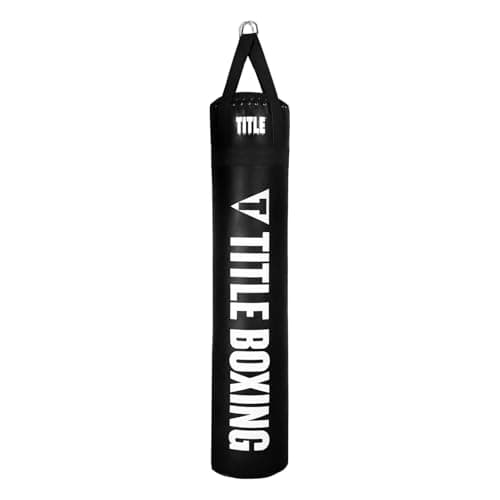
Key specs
- 70 lb
- 49 × 13 × 13 in
- 90 lb
- 60 × 13 × 13 in
- Shell
- Synthetic leather, Cordura inner lining
Scores · editorial, out of 10
- Weight fit for beginners
- 8
- Setup & space demand
- 7
- Strike surface & feel
- 7
- Stability & swing
- 8
- Value
- 9
Pick 01 · Heavy bags
TITLE Boxing Synthetic Heavy Bag (70 / 90 lb)
TITLE Boxing
The cheapest bag on this site with published dimensions and a water-resistant Cordura lining — and the 90 lb runs 60 in, long enough for kicks.
Best for
A garage bag on a budget where damp is a real risk
Pros
- TITLE publishes exact dimensions for both weights — rare at this price
- Inner-woven Cordura lining that TITLE calls water resistant, which matters in an unheated garage
- The 90 lb at 60 in is genuinely long enough to work low kicks
Cons
- 13 in diameter is narrow — a body kick lands on a smaller target than a Muay Thai bag
- No hanging hardware named in the listing; budget for a swivel and straps
Specs from TITLE Boxing — Synthetic Heavy Bag (dimensions, shell, lining).
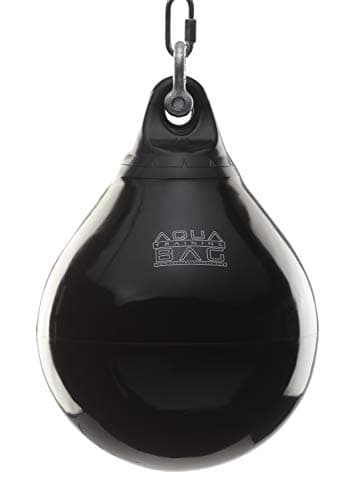
Key specs
- Filled weight
- 75 lb (ships at 9 lb)
- Fill
- Water, via garden hose
- Hangs from
- Ceiling mount or the ATB stand
Scores · editorial, out of 10
- Weight fit for beginners
- 9
- Setup & space demand
- 9
- Strike surface & feel
- 8
- Stability & swing
- 7
- Value
- 7
Pick 02 · Heavy bags
Aqua Training Bag 15 in / 75 lb
Aqua Training Bag
A teardrop bag you fill from a garden hose to 75 lb — ships at 9 lb, has no hard spots, and drains for a move.
Best for
Apartments and anyone who moves — or whose knuckles hate a hard bag
Pros
- Water fill means no settling and no hard bottom third
- Ships light and drains in minutes — the only heavy bag that fits a walk-up apartment
- Made in New York; 1-year warranty
Cons
- Teardrop shape is shorter than a straight bag — low kicks and some body-shot angles feel different
- A puncture is a wet floor; keep it away from anything sharp
Specs from Aqua Training Bag — 15 in 75 lb Aqua Punching Bag (specs).
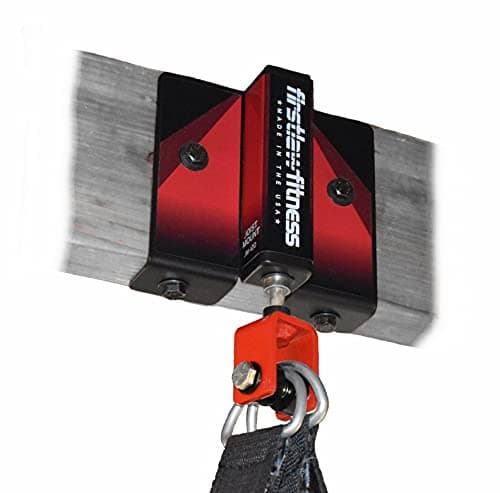
Key specs
- Rated
- 120–200 lb bags
- Attaches to
- Side and bottom of an open floor joist
- Swivel
- Compression spring, 360°
Scores · editorial, out of 10
- Rated load
- 9
- Joist / beam / wall compatibility
- 8
- Hardware included
- 7
- Swivel & noise
- 9
- Value
- 8
Pick 03 · Mounts & hangers
Firstlaw Fitness Joist Mount 200
Firstlaw Fitness
A US-made mount that clamps to the side and bottom of an open joist, with a compression spring and 360° swivel — rated for bags from 120 lb to 200 lb.
Best for
An unfinished garage or basement ceiling with exposed joists and a heavy bag
Pros
- Rated to 200 lb, so it covers the 130 lb Muay Thai bags no stand here will take
- A lighter Joist Mount 120 is sold alongside it, so you buy the rating that matches your bag
- Spring dampens the jerk and the noise
- Lifetime warranty, made in the USA
Cons
- Only for exposed joists — nothing to grab on a drywall ceiling
- Overkill, and overpriced, for a 70 lb bag — buy the 120 model instead
Specs from Amazon listing — Firstlaw Fitness Joist Mount 200, bags 120–200 lb (rating, fitment; checked 2026-10-03).
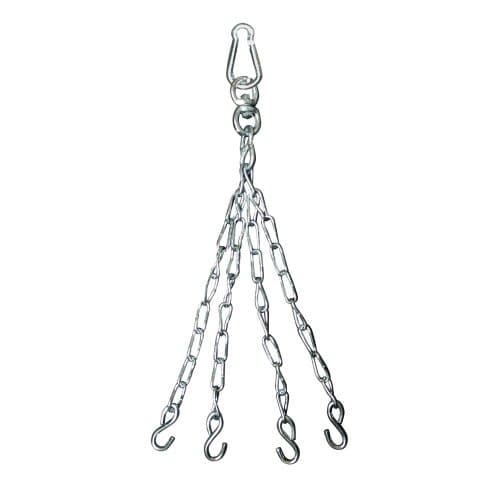
Key specs
- Rated
- Up to 200 lb
- Parts
- Hanger chain + swivel
- Use
- Any hanger, mount or beam bracket
Scores · editorial, out of 10
- Rated load
- 6
- Joist / beam / wall compatibility
- 9
- Hardware included
- 9
- Swivel & noise
- 4
- Value
- 10
Pick 04 · Mounts & hangers
Ringside Heavy Bag Hanger Chain and Swivel
Ringside
The 200 lb-rated chain-and-swivel set that turns any hanger into a hanging bag — double the rating of the hardware most bags ship with.
Best for
Anyone whose bag or mount didn't come with chain and a swivel
Pros
- 200 lb rating covers every bag on this site, including the 130 lb Muay Thai bags
- The swivel lets the bag rotate instead of twisting the mount and the straps
- Costs less than a pair of wraps
Cons
- Chain is loud — a strap system or spring mount is quieter
- Ringside publishes no chain length on the listing, so check your drop before ordering
Specs from Amazon listing — Ringside Heavy Bag Hanger Chain and Swivel, 200 lb (rating, parts; checked 2026-10-03).
FAQ
Frequently asked questions
Can you leave a heavy bag outside?
You can, and it will not last as long. No major brand sells or warrants a heavy bag for outdoor use. If it must live outside, put it somewhere covered and shaded, choose a vinyl or synthetic shell with a water-resistant lining, and either take it down after sessions or use a breathable cover.
What kind of punching bag is best for outdoors?
A vinyl or synthetic-leather shell with a water fill or a shredded-textile fill. Water-filled bags are the most weather-tolerant because there is nothing absorbent inside — just drain or bring them in before a freeze. Avoid canvas shells, genuine leather and any fiber-and-sand fill.
Can you hang a punching bag from a tree?
No. A limb that looks strong can split without warning under a repeated swinging load, and the bag comes down with it. The same goes for fence posts, play sets, swing frames, shade sails and gutter fascia. Use a structural rafter or beam, or use a stand.
Can you hang a heavy bag from a pergola?
Only if the beam is a genuine structural member — a 4x6 or doubled 2x8 or heavier, with posts set in concrete — and only after you probe the wood for rot near the ends and anywhere water collects. Thin pergola slats and decorative rafters are not mounts.
Will my heavy bag chain rust outside?
Yes. Use galvanized or stainless fasteners where the mount allows, put a light oil or dry spray lubricant on the chain, swivel and carabiners every few weeks, and keep the assembly out of the drip line at the roof edge. Replace any part that is deeply pitted rather than just surface-bloomed.
Can a heavy bag freeze?
A water-filled bag can, and freezing water expands and may split a bladder or a seam — drain it or bring it inside before winter. A dry-filled bag will not freeze, but it will be noticeably harder to hit when cold, so wrap properly and warm it up with light rounds first.
Is a freestanding bag better outside than a hanging bag?
Often, yes. It needs no structure to trust, it moves out of the weather in one go, and the filled base does not care about damp. Expect surface rust on the frame and keep it off wet grass. See best freestanding punching bag.
Next in your kit
Best boxing gloves for the heavy bag →Keep reading
Related guides
- How to hang a heavy bag in a garage →
The full seven-step indoor version.
- Best heavy bag mounts and hangers →
Ratings and fitment for every ceiling.
- Best freestanding punching bag →
No structure to trust, wheels out of the weather.
- Best punching bag filler →
Why damp sand ruins a bag.
- How to stop a heavy bag from swinging →
Shorter drop, less load on the beam.
- Best heavy bag stand →
The answer when nothing outdoors is sound.
Sources
- —TITLE Boxing — Synthetic Heavy Bag (dimensions, synthetic shell, water-resistant Cordura lining) · titleboxing.com
- —Aqua Training Bag — 15 in 75 lb Aqua Punching Bag (water fill, shipping weight, draining) · aquatrainingbag.com
- —Amazon listing — Firstlaw Fitness Joist Mount 200, bags 120–200 lb (rating, fitment, spring and swivel) · amazon.com
- —Amazon listing — Ringside Heavy Bag Hanger Chain and Swivel, 200 lb (rating, parts) · amazon.com