Guide · Protection
How to Size Shin Guards
Shin guards are sized by size bands rather than a measurement, and the bands are keyed to height and weight rather than to your leg. That works for most people and fails for anyone with long shins, short shins or a big foot. Here is how to measure, how to read a chart, and the three places to check the fit before you commit.
Written by Mike M. · Owner, Iron Mako Media
Published
Bag & Bell is reader-supported. Product links go through our affiliate resolver and we may earn a commission from qualifying purchases at no cost to you. Prices are the retailer's, come from Amazon's own product data on the date shown, and change — the button always opens the live listing.
Part of the Protection hub.
How to size shin guards · 6 steps
Step 01
Measure your shin length
Sit down and measure from just below the kneecap to the top of the foot where it bends. That is the length the guard's shin plate has to cover. Write it down — you will compare it against the band you end up with.
Step 02
Measure the calf circumference
Measure around the thickest part of the calf. Shin guards wrap the leg and fasten behind it, so a heavy calf can exhaust the strap travel even when the length is right.
Step 03
Read the manufacturer's chart, not a generic one
Every brand bands differently. Most charts key the size to your height and body weight rather than a leg measurement, so use the chart from the brand you are actually buying and ignore the one from the brand you are not.
Step 04
If you are between sizes, go up
A guard that is slightly long will sit a little lower on the foot and bunch marginally at the knee. A guard that is too short leaves bare shin above the instep pad, which is exactly where a checked kick lands.
Step 05
Check the three fit points
The top of the shin plate should sit just below the kneecap, not over it. The instep pad should cover the top of the foot without hanging past the toes. The straps should fasten behind the calf with travel left over, not at the very end of their run.
Step 06
Test it with a kick
Put them on, throw ten light kicks and ten light checks against a bag or pad. A guard that rotates around the shin, slides down, or has the instep pad flapping is the wrong size however well it measured standing still.
Why shin guard sizing is confusing
Almost every other piece of boxing kit is sized against something you can measure: gloves by weight in ounces, headgear by a head circumference, mouthguards by an age band. Shin guards are sold as S, M, L and XL — sometimes XS — and the chart that tells you which one you are is usually keyed to your height and body weight, not to the leg the guard goes on.
That works for the majority of people, because shin length correlates reasonably well with height. It fails for anyone whose proportions are not average: a tall person with a short shin, a shorter person with a long one, or anyone with a heavy calf. That is why this page starts with a tape measure even though the chart will not ask for the number — you need it to sanity-check what the chart tells you.
| Measure | Where | What it tells you |
|---|---|---|
| Shin length | Below the kneecap to the bend of the foot | Whether the shin plate will actually cover you |
| Calf circumference | Around the thickest part of the calf | Whether the straps will have travel left |
| Height and weight | As the brand's chart asks | The size band to start from |
| Foot length | Heel to longest toe | Whether the instep pad will overhang |
The three fit points
At the knee. The top of the shin plate should sit just below the kneecap. Over the kneecap and it will dig in every time you lift the knee, and it will push the whole guard down over a round. More than an inch or two below and you have bare shin at the top — less critical than bare shin at the bottom, but not ideal.
At the foot. The instep pad should cover the top of the foot and stop before the toes. A pad that overhangs catches on the floor and on pads, and it is the single most common complaint about a guard bought a size too big. A pad that stops short of the ankle leaves the bony part of the foot exposed, which is a genuinely painful place to be caught.
At the straps. They should fasten behind the calf with some travel left on the hook-and-loop. Closing at the very end of the strap means the guard will loosen as the material relaxes and you will be re-fastening it between rounds.
What the size bands typically cover
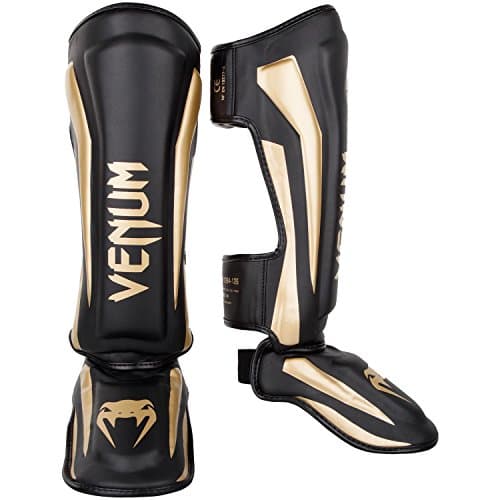
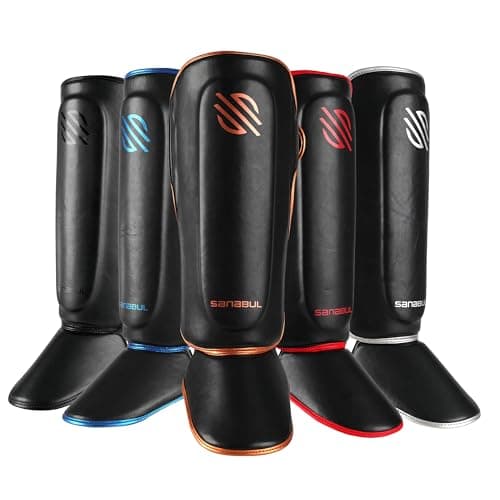
The practical range on the two pairs we list is a good illustration of the problem. The Venum Elite Standup runs M, L and XL — three bands covering most adults and nothing below. The Sanabul Essential runs XS, S/M and L/XL, so it reaches further down the scale than the premium pair does. For a teenager, a smaller adult, or anyone who has found M too long, that XS band is the whole reason to look at it.
Going the other way, if you are tall with a long shin and XL still leaves bare leg above the instep pad, the answer is usually a different brand rather than a different size — some lines simply build longer plates. Measure your shin, compare it against the published plate length where a brand gives one, and buy on that rather than on the band letter.
Instep guards versus shin-only
Two broad shapes. A combined shin-and-instep guard — both our picks — is one piece covering the shin and the top of the foot, which is what almost everyone training kickboxing or Muay Thai wants. Shin-only sleeves exist, leave the foot exposed, and are mostly for competition rules that require it or for people who find the instep pad interferes with their footwork.
For home and club training, buy the combined guard. The top of the foot is a thin layer of skin over bone and it is where a checked kick or a mistimed teep lands most often.
How tight is right
Firm enough that the guard moves with the leg, loose enough that you can feel your foot. Numbness, pins and needles or a cold foot means the straps are too tight across the calf or the ankle elastic is compressing the top of the foot. Loosen it rather than training through it; the same rule applies here as it does to glove and wrap tightness — circulation first, everything else after.
Note that guards loosen as they warm up and the foam compresses, so a pair that felt perfect in the shop will feel slightly loose in round three. That is normal. A pair that is loose from the first minute is the wrong size.
Do you need them at all?
If you kick a bag, not necessarily — bag work can be done bare-shinned, and most people do. If you kick pads held by a partner, or spar, or do any clinch work, yes. The specific thing shin guards protect against is shin-on-shin contact when a kick is checked, and that is an injury that puts people out for weeks. We set out when the purchase becomes necessary in do you need shin guards for kickboxing.
Care, briefly
They absorb a lot of sweat and they do not dry inside a kit bag. Take them out after every session, open the straps, and let them air. Wipe the shell with a barely damp cloth and dry it. Never put them in a washing machine — the foam saturates and the hook-and-loop collects lint until it stops holding, at which point the guard rotates and you are back to the problem at the top of this page.
What to buy alongside
If you are kitting out for kickboxing rather than boxing, shin guards sit alongside a glove with a more open palm and a shorter cuff, and the same mouthguard you would use for boxing. Our kickboxing at home equipment page lists the whole setup, and best kickboxing gloves covers the glove side.
Picks
Two pairs worth sizing
A first pair in M, L and XL with an anatomical shin-and-instep build, and a budget pair that runs down to XS — which matters if you are at the small end of the range or buying for a teenager.
Key specs
- Sizes
- M · L · XL
- Coverage
- Shin + instep, anatomical
- Closure
- 2 wide straps + foot elastics
Scores · editorial, out of 10
- Shin & instep coverage
- 9
- Strap security & fit
- 9
- Padding for a first pair
- 8
- Materials & durability
- 8
- Value
- 7
Pick 01 · Shin guards
Venum Elite Standup Shin Guards
Venum
The standard kickboxing shin guard: Skintex leather over high-density foam with extra padding on the shin and instep, two wide hook-and-loop straps and under-foot elastics — sized M to XL.
Best for
A first pair of shin guards for kickboxing or Muay Thai pad work and light sparring
Pros
- High-density foam with additional padding on the shinbone and instep, per Venum
- Two large hook-and-loop straps plus elastic bands under the foot and heel keep it from rotating on a kick
- 100% Skintex synthetic leather — wipes clean; handmade in Thailand
Cons
- No small size listed on the product page
- Venum sizes by shin length (below the knee to the ankle) — measure before ordering
Specs from Venum — Elite Standup Shin Guards (features, sizes).
Key specs
- Sizes
- XS · S/M · L/XL
- Padding
- Durasoft impact foam
- Closure
- Double hook-and-loop straps
Scores · editorial, out of 10
- Shin & instep coverage
- 7
- Strap security & fit
- 8
- Padding for a first pair
- 7
- Materials & durability
- 7
- Value
- 9
Pick 02 · Shin guards
Sanabul Essential Hook & Loop Shin Guards
Sanabul
The value pair with a small size: engineered leather, Durasoft foam, double straps and triple stitching, in XS through L/XL — the pick for a smaller adult or a teen.
Best for
A budget first pair, especially in the extra-small size the premium pairs skip
Pros
- Extra-small through L/XL — the only pair here that fits a smaller frame
- Triple-stitched throughout, per Sanabul; engineered-leather shell
- Double hook-and-loop strap fasteners and a contoured fit
Cons
- Sanabul's page doesn't detail instep coverage — check the size guide and photos for the foot section
- Thinner build than the Venum Elite; fine for pad work, less so for hard sparring
Specs from Sanabul — Essential Hook & Loop Shin Guards (features, sizes).
FAQ
Frequently asked questions
What size shin guards do I need?
Start from the brand's own chart, which will key the size to your height and body weight, then check it against your shin length and calf circumference. If you are between sizes, go up — a short guard leaves bare shin above the instep pad.
How should shin guards fit?
The top of the shin plate just below the kneecap, the instep pad covering the top of the foot without reaching the toes, and the straps fastening behind the calf with travel left on the hook-and-loop.
Are shin guards sized by shoe size?
No. Most brands size by height and body weight, and the instep pad is proportioned to the band rather than to your foot. Measure the shin and the calf, and check the foot length if your feet are unusually large.
Should shin guards be tight?
Firm enough that the guard turns with your leg rather than around it, loose enough that your foot does not go numb. Expect them to loosen slightly as the foam warms and compresses over a session.
Why do my shin guards keep rotating?
They are too big, or the straps are fastened in the wrong place. A rotating guard puts the padding on the side of your shin and the bare bone at the front, which defeats the purpose entirely.
Do shin guards cover the foot?
Combined shin-and-instep guards do, and that is what almost everyone training kickboxing or Muay Thai should buy. Shin-only sleeves leave the top of the foot exposed, which is one of the most common places to get hurt.
Next in your kit
Best mouthguard for boxing →Keep reading
Related guides
- Do you need shin guards for kickboxing? →
When the purchase actually becomes necessary.
- Kickboxing at home equipment →
The rest of the kit around them.
- Best kickboxing gloves →
The glove shape that suits kicking.
- First sparring kit checklist →
What else goes in the bag before you spar.
Sources
- —Venum — Elite Standup Shin Guards (features, sizes) · venum.com
- —Sanabul — Essential Hook & Loop Shin Guards (features, sizes) · sanabulsports.com