Comparison · Heavy Bags
Speed Bag vs Double End Bag: Which Should You Buy First?
Buy the double end bag. It costs less to install, is far quieter, and teaches something a heavy bag cannot — moving your head after you punch. The speed bag is the better rhythm tool and the harder thing to fit into a house. Here is the reasoning, and the two exceptions.
Written by Mike M. · Owner, Iron Mako Media
Published
Bag & Bell is reader-supported. Product links go through our affiliate resolver and we may earn a commission from qualifying purchases at no cost to you — from Amazon and from brand partner programs. Amazon prices come from Amazon's own product data on the date shown; a brand-direct pick shows that brand's list price on the date we read it. Both change, and the button always opens the live listing.
Part of the Heavy Bags hub.
The decision table
| Speed bag | Double end bag | |
|---|---|---|
| What it trains | Rhythm, shoulder endurance, hands up | Head movement, timing, accuracy, defense |
| Installation | Platform + swivel mounted into structure | Ceiling hook above, weight or anchor below |
| Total cost to get working | Bag + swivel + platform | Bag + cords (usually included) + a weight |
| Noise | The loudest thing in a home gym | Almost silent — glove slap only |
| Apartment friendly | No, if the wall is shared | Yes — the best striking bag for a flat |
| Drilling required | Yes, into a stud or masonry (or a doorway frame) | One ceiling hook, or none with a bag stand |
| Space when not in use | Platform stays on the wall | Unhook it and the room is a room |
| Learning curve | Steep — weeks before it feels like rhythm | Shallow — usable on day one |
| Does it hit back | No | Yes, straight at your face |
| Sizing rule | Bigger is slower — start 6×9 in or up | Bigger is slower — start 8 or 9 in |
Why the double end bag wins for most homes
Three reasons, in order of how much they decide it.
Installation. A speed bag needs a rigid platform bolted into structure at chin height. That is a real job and, in a rented apartment or a room with drywall walls, sometimes an impossible one. A double end bag needs one hook above and something heavy below — and if you already own a bag stand, you can hang it between the top bar and the base and drill nothing at all. If you cannot fix anything to the building at all, there is a third option neither of these two covers: a freestanding reflex bag stands in its own weighted base and needs no hook, no anchor and no platform.
Noise. A speed bag transmits every hit through the board into the wall. A double end bag weighs a couple of pounds and hangs on rubber cords, so the loudest sound is your glove. If anyone shares a wall, ceiling or floor with your training space, this is not a close call.
What it teaches. A heavy bag teaches you to punch. Neither of these bags does — and the double end bag teaches the thing a heavy bag actively lets you get away with: standing still after you throw. It comes back along the line you hit it, at head height, which means you either move your head or get tapped. That is a habit worth more than rhythm for most beginners.
Why the speed bag is still worth owning
Because nothing else trains shoulder endurance and rhythm the same way. Three rounds on a speed bag is genuinely tiring in the shoulders and traps, and it enforces hands-up posture for the whole round — you physically cannot drop your hands and keep the bag going. It is also the more enjoyable of the two once it clicks, which is not nothing when the hardest part of home training is showing up.
The honest caveat: it takes weeks. Most people buy a speed bag, fail at it for ten minutes, and never go back. A big bag (6×9 in or larger) and a platform set at the right height — middle of the bag level with your mouth or chin — are the difference between sticking with it and shelving it.
Space and ceiling height
A speed bag platform needs about a 3 ft square of wall and nothing in front of it. A double end bag needs a column of clear space from a ceiling fixing down to a floor weight, plus room to move around it — call it a 6 ft circle. If your ceiling is low, the double end bag suffers more: the shorter the cord run, the less the bag travels and the snappier it gets, which pushes you toward a bigger diameter to compensate.
If you can only install one thing this year
Hang the double end bag. It is cheaper to get working, it cannot annoy anyone through a wall, and it is the one that makes you better at the sport rather than fitter at it. Then add the speed bag when you have a wall you can drill and time to spend learning it. The double end bag roundup and the speed bag roundup have the picks for each.
How we compared these
From the manufacturers' own product pages, checked on 26 September 2026 and cited under each card. The comparison is our reading of published construction and installation requirements against what a home setup can realistically accommodate. No prices appear in the text because they change daily — each button opens the live price.
If the double end bag wins for you, start with slack cords and single jabs rather than combinations — the reasoning is in how to use a double end bag.
Picks
One of each
The double end bag to start with, and the complete speed bag kit if the platform is not a problem for you.
Key specs
- Sizes
- 5 in · 8 in diameter
- Shell
- Engineered leather, welted reinforced seams
- Included
- Two industrial rubber cables with S-hooks
Rubric · how it scores per criterion
- Rebound speed for beginners
- Strong
- Cords & anchoring included
- Excellent
- Size options
- Strong
- Shell & bladder durability
- Strong
- Value
- Excellent
Pick 01 · Double end bags
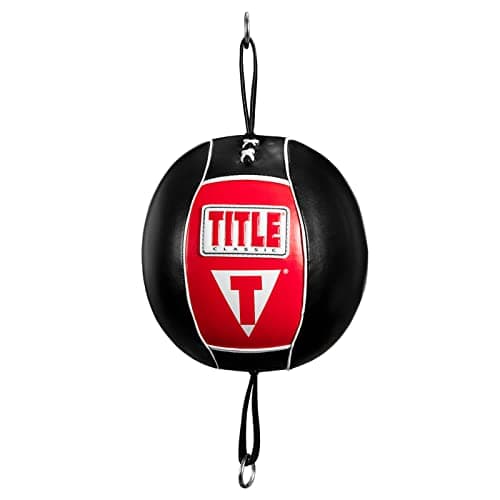
TITLE Classic Double End Bag 3.0
TITLE Boxing
Two cords in the box, twin steel O-rings, a choice of 5 in or 8 in, and the lowest price of any double end bag with published sizes.
Best for
A first double end bag — buy the 8 in and learn the timing before you go small
Why we picked it
- Both cables are included — a bag without cords is useless and many are sold that way
- Multi-layer top and bottom loops with twin steel O-rings
- Two sizes, so you can buy the forgiving 8 in first and the 5 in later
- Nylon-stitched welted seams rather than a glued edge
Specs from TITLE Boxing — Classic Double End Bag 3.0 (sizes, shell, included cables).
Key specs
- Includes
- 24 in platform, adjustable mount, 10 × 7 in speed ball
- Board
- 24 in diameter
- Mount
- Heavy-duty, height adjustable
Rubric · how it scores per criterion
- Rebound consistency
- Strong
- Platform / swivel included
- Excellent
- Size options
- Solid
- Shell & bladder durability
- Strong
- Value
- Excellent
Pick 02 · Speed bags & platforms
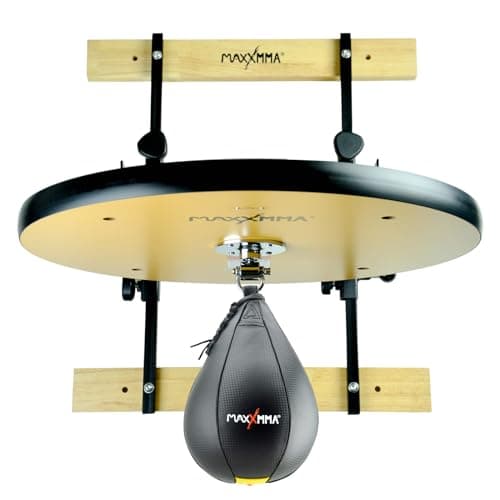
MaxxMMA Adjustable Speed Bag Platform Kit (24 in)
MaxxMMA
Board, mount and a 10 × 7 in speed ball in one box, with a published 24 in board and height adjustment — the only speed bag purchase that cannot leave you short a part.
Best for
A first speed bag at home, where the platform is the hard part to get right
Why we picked it
- The parts that must match — board, mount, bag — arrive matched
- Board diameter and bag size are both published (24 in board, 10 × 7 in ball), which most kits leave out
- Height adjusts, so the same board suits a 5 ft 4 in and a 6 ft 2 in user
- A 10 × 7 in ball is a large, slow, forgiving rebound — the right size to learn the rhythm on
Price as of November 18, 2026
#ad · disclosure
FAQ
Frequently asked questions
Is a speed bag or double end bag better for beginners?
A double end bag, for most people. It is usable on day one, needs only a hook and a weight to install, is far quieter, and it trains head movement and timing — which a heavy bag never will. A speed bag takes weeks before it feels like anything.
Which is harder to install?
The speed bag, by a long way. It needs a rigid platform bolted into a stud or masonry wall at chin height. A double end bag needs one ceiling fixing and something heavy on the floor, or nothing at all if you hang it from a bag stand.
Which is quieter?
The double end bag, and it is not close. A speed bag transmits every hit through its board into the wall; a double end bag hangs on rubber cords and the loudest sound is the glove.
Do they replace a heavy bag?
No. Neither develops punching power or teaches you to put your weight behind a shot. Both are supplements to a heavy bag, not substitutes for one.
Can I have both in a small room?
Yes, if the speed bag platform goes on a wall and the double end bag hangs in the middle of the room and unhooks. They do not compete for the same space — they compete for the same hour.
Which is better for fitness?
The speed bag. Three rounds is genuinely tiring in the shoulders and forces your hands up for the whole round. The double end bag is a skill tool more than a conditioning one.
Next in your kit
Best double end bags for home →Keep reading
Related guides
- Punching bag vs speed bag →
The comparison against the heavy bag.
- Best double end bags for home →
Six picks, sizing and anchoring.
- Best speed bags for home →
Kits, bags, platforms and mounting height.
- Best punching bag for an apartment →
If noise is the deciding factor.
- Best reflex bags →
The third small bag — and the only one that needs no fixings.
- Best punching bag for home →
The bag both of these supplement.
- Best mounts and hangers →
What either one hangs from.
Sources
Brands: want your product tested? For Brands.